


How To Choose The Right Ambulance for EMS Operations
Views: 0 Author: Site Editor Publish Time: 2026-03-20 Origin: Site


Introduction
Not all ambulances fit every EMS mission. The wrong one can slow care and raise costs. In this article, you will learn how to compare ambulance types, daily needs, and buying priorities.
Understanding Ambulance Types for EMS Operations
Type I Ambulances for High-Acuity and Rural EMS Operations
Type I ambulances use a truck-style chassis and a modular patient compartment. They are often chosen for ALS work, rescue response, and rural or mixed-terrain deployment. Their heavier-duty design gives crews more interior space and more payload capacity, which helps when they carry advanced medical equipment or treat unstable patients during longer transports.
● Why they work well
They offer strong durability and a roomy patient area. That gives crews more working space during high-acuity response. It also supports better organization for equipment and supplies.
● What buyers should watch
Their larger footprint can reduce maneuverability in dense urban areas. Parking, turning, and moving through narrow streets can all become harder. That trade-off matters for city-based EMS fleets.
Type II Ambulances for Transport-Focused EMS Operations
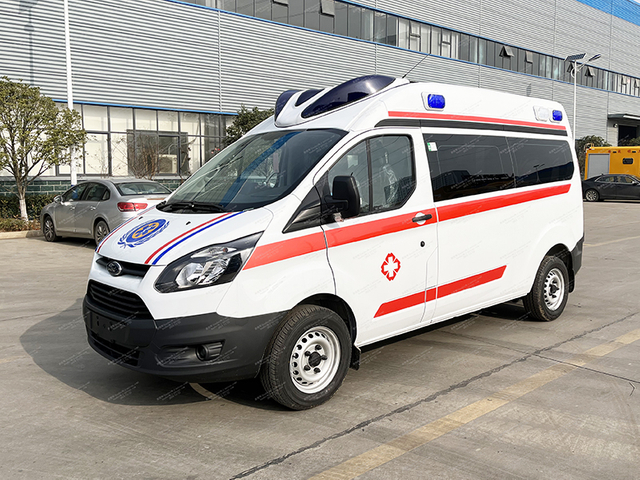
Type II ambulances are built from commercial van platforms rather than modular box bodies. The article presents them as a practical option for BLS transport, interfacility transfers, and backup response roles. Their biggest advantage is efficiency. They are easier to drive in tight streets, easier to deploy quickly, and usually less expensive to operate over time.
● Where they fit best:
They are often used for BLS calls, interfacility transport, and secondary fleet roles. Those jobs reward speed, simplicity, and lower operating costs.
● Main limitation:
They have less storage and less treatment space. Because there is no separate modular compartment, crews may have less room to move or manage complex equipment.
Type III Ambulances for Flexible Urban and Suburban EMS Use
Type III ambulances sit between Type I and Type II models. They use a cutaway van chassis plus a square patient compartment, so they offer more room than Type II units while staying easier to manage than many Type I builds. One of their biggest advantages is access. Type III ambulances usually have a larger pass-through opening between the cab and patient area, which can improve movement and workflow during transport.
● Why many agencies choose them
They balance capacity, access, and maneuverability well. That makes them useful when one fleet must cover several EMS roles.
● What to consider
They may not match the payload and rugged durability of a Type I unit. Still, they offer more flexibility than Type II ambulances for mixed urban and suburban operations.
| Type | Features | Best Use Cases | Advantages | Disadvantages |
|---|---|---|---|---|
| Type I | Truck chassis with a modular patient compartment | High-acuity and rural EMS operations | Strong durability, spacious patient area | Less maneuverable in urban settings |
| Type II | Built on a commercial van platform | BLS transport, interfacility transfers | Efficient in tight streets, lower operating costs | Less storage and treatment space |
| Type III | Cutaway van chassis with a square patient compartment | Flexible urban and suburban EMS use | Good balance of capacity and maneuverability | Lower payload capacity compared to Type I |
Key Factors When Choosing Ambulances for Daily EMS Operations
Call Volume, Patient Acuity, and EMS Response Profile for Ambulances
The first question is simple: what calls does the agency handle most often? Some EMS teams focus on transfers and lower-acuity patients. Others manage frequent emergencies and unstable cases. They all need ambulances, but they do not need the same type. High call volume increases wear, while higher-acuity care requires more space, storage, and faster equipment access.
● Low-volume, transport-focused systems:
They often need efficient ambulances, not the heaviest platform available. If most patients are stable, a smaller or simpler unit may control fuel use, reduce operating cost, and still do the job well. That kind of fleet usually values reliability and practicality over maximum payload or interior complexity.
● High-demand ALS systems:
They usually need more durable ambulances and better interior support for care. Frequent calls, more serious patients, and longer shifts make layout quality much more important. In those systems, the wrong platform can create daily bottlenecks, even if it looked cost-effective at first.
● Mixed-response agencies:
They need to decide which call type drives most of the workload. If the fleet handles both transfers and emergency response, then balance becomes more important than extremes. Buyers should ask which tasks happen most often, which ones are most demanding, and which compromise would hurt operations the most.
Geography, Terrain, and Service Area Demands on Ambulances
Service area changes the way ambulances perform. A unit that feels perfect in a dense city may become frustrating on long rural routes. One built for rougher roads may feel oversized in downtown traffic. The article points out that urban systems often prioritize maneuverability, while rural coverage usually favors power, storage, and stronger-duty platforms. That distinction matters because daily road conditions shape everything from response speed to crew fatigue.
● Urban EMS priorities:
They usually include maneuverability, quicker turnarounds, and easier access in tight spaces. Crews may value a compact footprint more than maximum interior size. That trade-off can be smart when traffic and deployment speed shape the workday.
● Rural EMS priorities:
They often include suspension strength, storage, power, and durability over distance. Longer routes can magnify every weakness in the vehicle. So they often reward a platform that feels stable and capable under harder conditions.
Crew Workflow, Patient Access, and Ambulance Interior Ergonomics
Even strong ambulances can fail the daily test if the interior works against the crew. The article stresses crew workflow for a reason. Responders need to move safely, reach supplies quickly, and stay efficient during stressful calls. If seating is awkward, equipment is too far away, or the stretcher blocks access, the design will slow care every shift. It may still look impressive on paper, yet perform poorly where it counts.
● Seating and movement:
Crews need seats and walk paths that support safe motion during transport. If they cannot reposition easily, patient care may become slower and less controlled. Over time, that also adds fatigue and frustration.
● Stretcher and patient access:
Stretcher placement affects almost every task inside the unit. It shapes how providers approach the patient, where supplies can sit, and how smoothly loading and unloading happens. A poor layout may create extra effort on every call.
● Equipment reach and layout logic:
Tools should be close to the point of care, not scattered across the cabin. Well-planned ambulances support faster work and fewer wasted motions. That is one reason many experienced buyers pay attention to interior design, not just chassis specs.
Matching the Right Ambulance to Your EMS System
Best Ambulances for High-Volume Urban EMS Systems
High-volume urban systems need ambulances that can keep up. Traffic, short response windows, and frequent calls all push agencies toward vehicles that are easy to move and easy to reset between runs. Type III ambulances often work well in these settings because they balance patient-space access and maneuverability. Type II units can also fit when the agency handles more transport-focused calls or works in tighter streets.
● Good urban fit:
Efficient layout, quick equipment reach, easier navigation. These features help crews move faster through busy shifts. They also reduce daily frustration.
● What to avoid:
Oversized ambulances that look strong on paper but slow the fleet in traffic. In dense service areas, maneuverability has real value.
Best Ambulances for Rural and Mixed-Terrain EMS Coverage
Rural systems usually ask more from ambulances. Distances are longer, roads may be rougher, and support can be farther away. Because of that, heavier-duty chassis, more payload capacity, and better ride stability often matter more than compact size.
Type I ambulances often make the most sense here. They give crews more room, more carrying capacity, and stronger performance in harder conditions.
● Why they fit:
They handle longer trips and tougher roads better. They also support more equipment and more demanding care.
● Why space matters:
Rural crews may spend more time treating patients during transport. That makes interior room more useful.
Best Ambulances for Interfacility, Backup, and Value-Focused EMS Use
Some agencies want practical ambulances, not maximum customization. For interfacility transport, backup use, and lower-acuity work, value often means lower fuel cost, simpler deployment, and reliable daily performance. The article makes clear that value is about long-term fit, not just the lowest price. Type II ambulances are often the best match here. They are easier to drive, easier to stage, and usually cheaper to operate than larger units.
● How to judge value:
Look at fuel use, maintenance, service life, and layout usability. A cheaper unit is not always the better unit.
● Best role:
Secondary fleets, stable patient transfers, and practical BLS-focused work.
Best Ambulances for Custom, Specialty, and Non-Standard EMS Missions
Customization helps when the mission is clear and repeated often. It adds less value when the changes are rarely used. That is where buyers should stay practical.
Changjiang can fit naturally into this discussion because its company profile emphasizes special vehicles, export support, and integrated supply capability, which can matter for project-based or market-specific ambulance needs.
| Key Factors | Description | Impact on Decision |
|---|---|---|
| Call Volume and Patient Acuity | Frequency of calls and severity of patients | High call volume requires more durable ambulances; higher-acuity care needs more space and equipment access |
| Geography and Service Area | Urban vs. Rural settings | Urban settings prioritize maneuverability and quick turnarounds, while rural settings need stronger platforms and more storage |
| Crew Workflow | Ease of movement and equipment access | Interior design impacts efficiency; proper seating, stretcher placement, and equipment access speed up response times |
Ambulance Buying Trade-Offs
Ambulance Cost vs. Long-Term Durability and Fleet Lifespan
Budget pressure is real for every EMS agency. Lower-cost ambulances may look attractive at first, yet they can become more expensive over time if they wear faster, need more service, or create more downtime. A stronger unit often protects value over the full ownership period. It may stay in service longer. It may need fewer major repairs. It may also keep the crew working without as many interruptions.
Ambulance Size vs. Maneuverability, Payload, and Working Space
Size is one of the most common ambulance trade-offs because it affects almost everything.
Larger ambulances usually give crews more room to work, more payload capacity, and better space for equipment.
Smaller units often move faster in traffic, fit tighter streets, and cost less to operate. The challenge is knowing which advantage matters more for the actual EMS mission.
● What larger ambulances give you:
They improve working space, equipment carrying ability, and treatment flexibility. That can help crews during advanced care or long transports. It also supports agencies that need stronger-duty daily performance.
● What smaller ambulances give you:
They improve maneuverability, deployment speed, and day-to-day efficiency in tighter service areas. Those gains matter when traffic, short trips, and frequent stops shape the workday. They are often a smart fit for transport-focused use.
Conclusion
Choosing the right ambulance means matching vehicle type to call volume, terrain, crew workflow, and budget. Larger units offer more space and durability, while smaller ones improve speed and maneuverability. Changjiang adds value by offering practical ambulance solutions, flexible configurations, and dependable service support for different EMS operations.
FAQ
Q: What are ambulances chosen for first?
A: Ambulances are chosen for mission fit, not looks.
Q: Which ambulances suit urban EMS?
A: Type II or III ambulances often fit cities.
Q: Which ambulances fit rural routes?
A: Type I ambulances handle longer, rougher trips better.
Q: Why does ambulance layout matter?
A: It improves safety, speed, and crew movement.
Q: Are cheaper ambulances always better?
A: No. Repairs and downtime can cost more.


