


Top 3 Municipal Truck Challenges—And the Trucks That Solve Them
Views: 0 Author: Site Editor Publish Time: 2026-08-14 Origin: Site


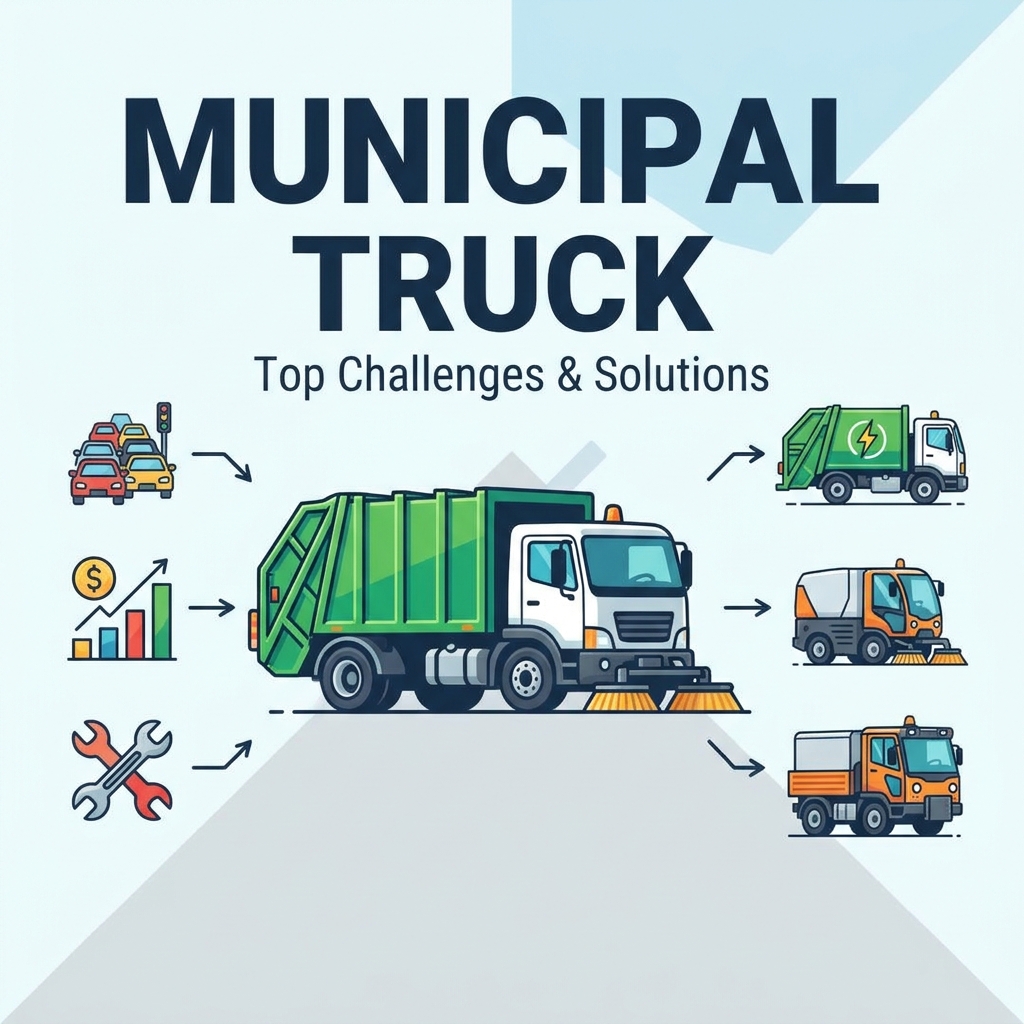
Public works departments and municipal fleets operate under zero-fail conditions. Strict operational constraints constantly collide with escalating service demands, expanding utility infrastructure, and aging equipment. Procuring a generic commercial vehicle for specialized civic duties inevitably leads to accelerated wear, excessive downtime, and compromised service delivery. Fleet managers must navigate complex trade-offs between emissions compliance, payload capacity, route-specific maneuverability, and the technical hurdles of transitionary drivetrain technologies.
Moving beyond standard spec sheets requires aligning specific chassis, drivetrains, and upfits directly with the operational bottlenecks they are engineered to resolve. Whether clearing arterial roads during a blizzard or maintaining subterranean water lines, every Municipal Truck must be configured for its exact environment. This guide breaks down the most critical fleet challenges—including rugged utility demands, urban density, and complex fleet maintenance—and details the specific vehicle configurations required to overcome them.
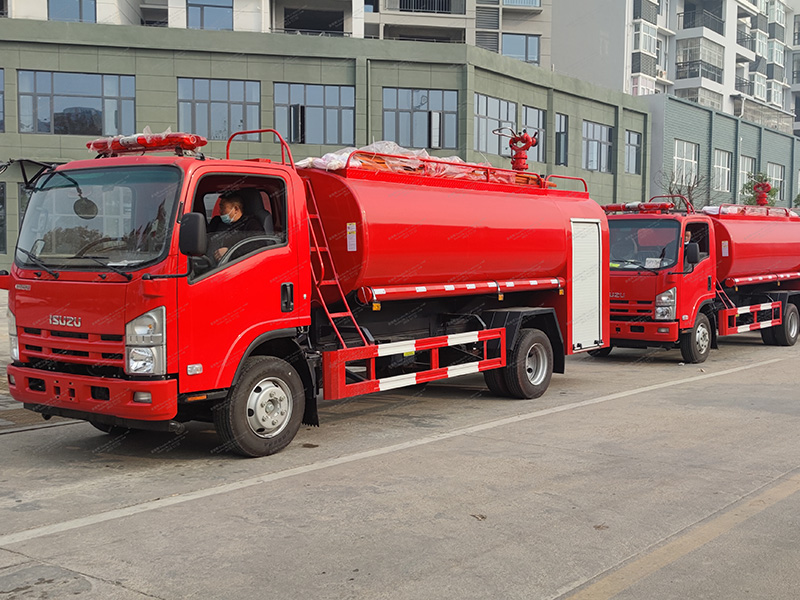
Terrain & Utility Infrastructure Adaptability: Unstable utility sites, severe weather, and expanding telecom networks require purpose-built AWD vocational chassis and robust boom/bucket upfits, balancing off-road traction with maximum legal payload.
Urban Uptime & Driver Ergonomics: Dense city routing demands Cab-Over-Engine (COE) architectures, advanced collision-mitigation systems, and driver-centric cabs to counter tight maneuvering wear and mitigate operator fatigue.
Maintenance Independence & ECU Access: Avoiding proprietary diagnostic lock-in, forced dealer-only DPF regenerations, and navigating EV depot infrastructure constraints requires prioritizing open-architecture platforms during procurement.
Table of Contents
How Municipal Trucks Handle Off-Road Terrain and Extreme Weather
The Operational Bottleneck
Municipal fleets frequently transition from paved highways to muddy, unpaved utility sites during spring thaws, or face severe winter weather conditions that demand immediate response. Standard commercial chassis suffer from traction loss, frame twisting, and suspension failures in these environments. When you take a standard highway tractor off the pavement to reach a downed power line in a muddy right-of-way, the suspension binds, and the frame flexes beyond its design limits. Generic frames simply cannot support the heavy, elevated payloads required for rapid telecom and utility line repairs without risking structural fatigue. You end up with cracked crossmembers and sheared mounting bolts.
The physical demands placed on these vehicles are immense. A truck carrying a heavy digger derrick or an insulated aerial bucket exerts massive torsional stress on the frame rails, especially when deploying outriggers on uneven ground. If the chassis lacks the necessary rigidity, the entire platform becomes unstable, creating a severe safety hazard for the operators working at height. Furthermore, getting stuck in the mud or snow means the job does not get done, leading to extended utility outages and frustrated residents.
Success Criteria
Vehicles deployed in these sectors must demonstrate high ground clearance and exceptional frame yield strength. This strength is measured in Resisting Bending Moment (RBM), which dictates the frame's ability to support heavy upfits like snow plows, digger derricks, and aerial devices. Reliable power delivery to all axles without sacrificing highway drivability remains a critical benchmark for successful deployment. You need a truck that can run at highway speeds to reach the site, then lock its differentials and crawl through deep mud without overheating the transmission.
The Municipal Truck Solutions
Severe-Duty AWD Vocational Trucks: Specifying set-back front axles improves weight distribution across the chassis. Factory-installed all-wheel drive and Front Engine Power Take-Off (FEPTO) extensions allow fleets to mount heavy snow plows without compromising structural integrity.
Utility and Aerial Upfits on Heavy-Duty Chassis: Integrating high-reach bucket attachments, insulated booms, and outriggers designed to maintain vehicle stability on uneven, soft ground during emergency line maintenance.
Articulated Dump Trucks (ADTs): Deployed for extreme off-road earthmoving, disaster recovery operations, and landfill management where standard rigid frames would fail.
Specialized Suspension Upfits: Integrating walking-beam or air-ride suspensions tailored to specific load profiles, such as shifting liquid loads in vacuum trucks or heavy debris in dump bodies.
Features-to-Outcomes Evaluation
Locking differentials and factory AWD translate directly to fewer towing incidents and reduced recovery times. When an operator can engage all axles with the flip of a switch, they avoid getting bogged down in soft soil. High-strength steel frames with elevated RBM ratings prevent structural fatigue under the intense plowing and lifting stress inherent to public works operations. A frame with an RBM of 2.5 million inch-pounds or higher ensures that the chassis will not permanently deform when lifting heavy concrete pipes or pushing wet, heavy snow.
Chassis Feature | Operational Benefit | Ideal Application |
|---|---|---|
High RBM Frame Rails | Prevents frame twisting and cracking under heavy dynamic loads. | Digger derricks, heavy snow plows, large vacuum trucks. |
Factory AWD with Locking Diffs | Maximizes traction in mud, snow, and loose gravel. | Off-road utility repair, winter road maintenance. |
Set-Back Front Axle | Improves weight transfer to the front axle, enhancing steering control. | Heavy front-mounted equipment, tight turning requirements. |
Walking-Beam Suspension | Maintains axle articulation and ground contact on uneven terrain. | Landfill operations, disaster debris removal. |
Implementation Risks & Mitigation
AWD systems and heavy boom upfits inherently reduce fuel efficiency, increase tire wear, and raise the vehicle's center of gravity. To mitigate these risks, limit AWD procurement strictly to routes requiring off-road utility access or primary snow-clearing duties. Do not spec AWD for trucks that will spend 95% of their time on dry pavement. Utilize electronic stability control systems and require mandatory operator training focused specifically on high-center-of-gravity vehicle dynamics. Drivers need to understand how a heavy aerial bucket changes the roll characteristics of the truck during cornering and evasive maneuvers.
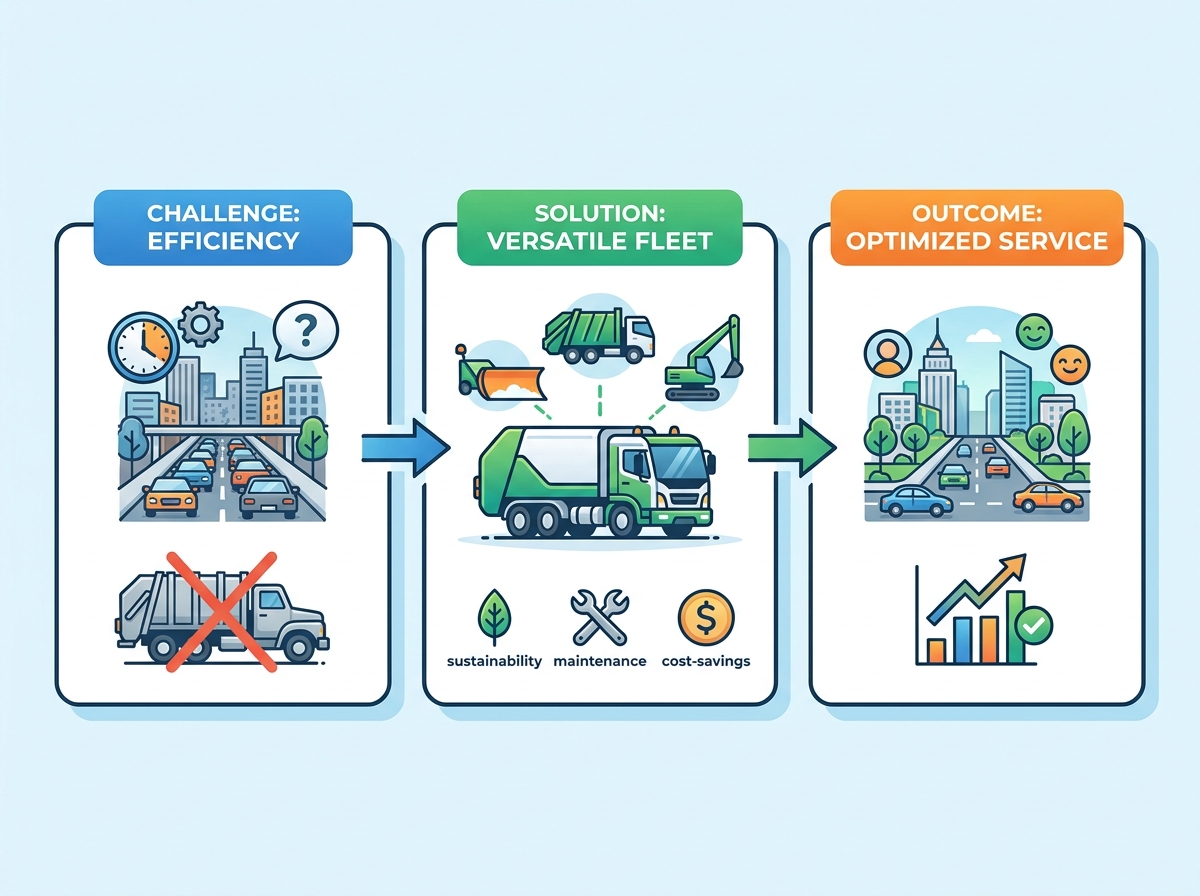
Boosting Uptime and Pedestrian Safety in Dense City Environments
The Operational Bottleneck
City streets present tight turning radii, low overhead clearances, and continuous stop-and-go traffic. This harsh environment accelerates brake wear, strains engine cooling systems, and increases the risk of collisions with vulnerable road users. Navigating a conventional long-hood truck through a narrow historic district or a crowded residential alley is a nightmare for operators. The massive blind spots created by the hood make it nearly impossible to see pedestrians, cyclists, or low-lying obstacles.
Additionally, constant curb scrubbing accelerates tire sidewall damage, leading to frequent blowouts and service interruptions. Waste collection vehicles, in particular, suffer from immense brake wear due to the hundreds of stops they make every single day. The constant idling required to power hydraulic compactors leads to excessive soot buildup in diesel particulate filters, triggering forced regenerations that pull the truck off its route.
Success Criteria
Procurement must prioritize maneuverability, specifically the curb-to-curb turning radius. Driver visibility, active collision mitigation, and drivetrain resilience against constant idling and low-speed operation are critical, particularly for waste management and street sweeping applications. You need a vehicle that can snake through parked cars without taking off mirrors, while providing the operator with a commanding view of the immediate surroundings.
The Municipal Truck Solutions
Cab-Over-Engine (COE) Chassis: Eliminates the conventional hood, drastically improving forward visibility and reducing the overall wheelbase while maintaining necessary payload capacity.
Advanced Driver Assistance Systems (ADAS): Specifying 360-degree camera systems, active blind-spot monitoring, and pedestrian collision mitigation protects operators and city residents in high-density corridors.
Automated Side Loaders (ASL): Utilized for waste management, these systems reduce physical strain on operators, speed up route completion times, and keep personnel safely inside the cab.
Hybrid and Battery Electric (BEV) Platforms: Ideal for low-speed, high-idle urban routes. Regenerative braking reduces mechanical brake wear, while electric Power Take-Offs (ePTOs) operate silently during early morning operations.
Features-to-Outcomes Evaluation
COE designs and active ADAS reduce minor collision rates in tight alleys significantly. By placing the driver directly over the front axle, you eliminate the massive forward blind spot, allowing them to see objects just inches from the front bumper. In refuse applications, regenerative braking extends brake pad lifecycles, keeping vehicles on their routes rather than in the service bay. Instead of replacing brake shoes every few months, fleets utilizing regenerative braking can often go years between brake jobs.
Urban Challenge | Vehicle Configuration Solution | Expected Outcome |
|---|---|---|
Tight Alleys & Intersections | Cab-Over-Engine (COE) Architecture | Reduced turning radius, fewer sideswipe accidents. |
Pedestrian Blind Spots | 360-Degree Camera Systems & ADAS | Enhanced situational awareness, lower collision liability. |
Excessive Brake Wear | Regenerative Braking (Hybrid/BEV) | Extended brake component lifespan, reduced maintenance downtime. |
Noise Ordinances | Electric Power Take-Offs (ePTO) | Compliance with early morning noise restrictions, improved resident relations. |
Implementation Risks & Mitigation
COE trucks can be more difficult to service due to cab-tilt requirements. Urban stop-and-go operations also increase the risk of engine overheating. Ensure maintenance bays have adequate vertical clearance for COE servicing. If your shop ceiling is too low, you cannot tilt the cab to access the engine. Specify heavy-duty cooling packages with oversized radiators and variable-speed fans to handle the lack of ram air during low-speed operation. Equip vehicles with tires featuring reinforced sidewalls designed specifically for curb contact to prevent premature blowouts.
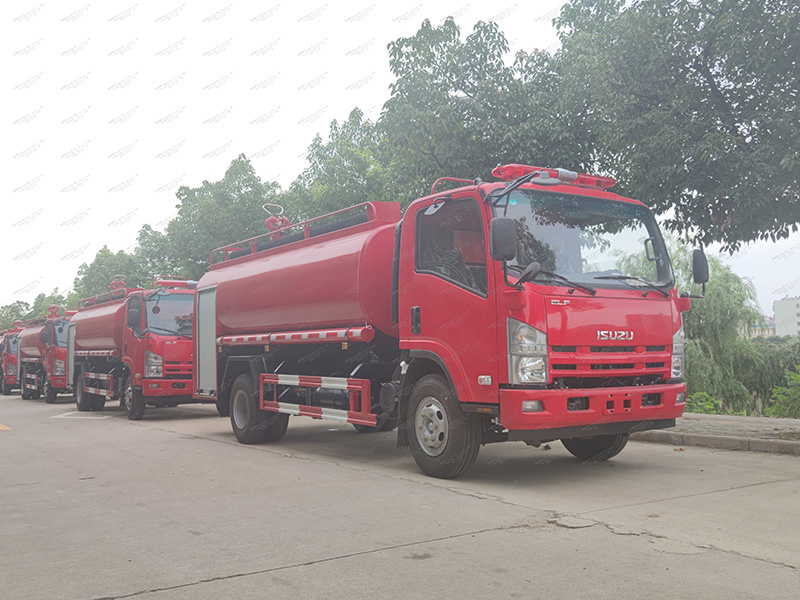
Managing Fleet Maintenance, Diagnostic Software, and EV Infrastructure
The Operational Bottleneck
Modern commercial vehicles are increasingly complex. Fleet managers face proprietary software lock-ins requiring dealer-only servicing, restricted Engine Control Unit (ECU) access, and frequent diesel particulate filter (DPF) failures. When a truck goes into limp mode because of a sensor fault, and you cannot clear the code without a dealer laptop, that truck is useless. You end up paying for a tow and waiting weeks for a service slot at the dealership, all for a five-minute software reset.
Simultaneously, the looming pressure of zero-emission vehicle mandates requires strategic planning around currently limited charging infrastructure. You cannot simply buy a fleet of electric trucks and plug them into standard wall outlets. The electrical grid at most municipal depots is entirely inadequate to support simultaneous fast charging of heavy-duty vehicles. Upgrading that infrastructure requires massive capital investment, trenching, transformer upgrades, and coordination with local utility providers.
Success Criteria
A viable fleet asset must offer open-architecture diagnostics and accessible service points for routine maintenance. It must also provide a clear compliance pathway for regional emissions regulations and feature manageable battery charging profiles for electric variants. Your technicians need the ability to plug in a generic scan tool, read the fault codes, perform forced regenerations, and get the truck back on the road without asking the manufacturer for permission.
The Municipal Truck Solutions
Right-to-Repair Friendly Platforms: Manufacturers that provide open access to diagnostic software, non-proprietary parts sourcing, and allow technicians to perform forced DPF regenerations in-house.
Simplified Diesel Architectures & Heavy-Duty Electrical: Specifying proven engine platforms with robust exhaust aftertreatment systems. High-output alternators are necessary to prevent electrical harness failures from heavy upfit draws.
Modular EV Chassis with Depot Integration: Electric trucks designed with standardized charging ports, paired with dedicated depot energy management software to prevent grid overload during fleet charging cycles.
Features-to-Outcomes Evaluation
In-house diagnostic and bi-directional ECU access reduces average downtime from weeks waiting for dealer slots to mere hours. When your mechanics can command a parked regeneration or recalibrate a sensor themselves, fleet availability skyrockets. Modular EV designs prevent total vehicle obsolescence as battery technology and depot charging capacity improve over time. By utilizing standardized charging protocols, you avoid being locked into a single vendor's proprietary charging hardware.
Implementation Risks & Mitigation
Transitioning to EVs or new diagnostic platforms requires heavy upfront capital, depot grid upgrades, and technician retraining. Heavy EV batteries also reduce total payload capacity. Phase in new technologies alongside legacy systems. Do not replace your entire fleet at once. Negotiate diagnostic software licenses and training as part of the initial procurement contract, and conduct route-specific payload modeling to balance battery weight with operational demands. If an electric refuse truck loses two tons of payload capacity due to battery weight, you must adjust the route density accordingly.
Smart Procurement Strategies for Custom Municipal Fleet Vehicles
Overall Value Influencing Factors
Balancing acquisition strategy requires looking beyond the initial sticker price. A cheaper initial chassis often requires expensive aftermarket modifications to handle specialized upfits, leading to premature structural or electrical failures. Procurement must focus on the durability of the frame, the reliability of the drivetrain under continuous load, and the availability of replacement parts. Buying a light-duty chassis and trying to reinforce it for heavy municipal work always results in broken springs, cracked frames, and blown transmissions. Spec the truck right the first time, based on the maximum anticipated load and the harshest operating environment.
Scalability and Fleet Standardization
A fragmented fleet introduces hidden operational burdens. Procuring from a limited number of Original Equipment Manufacturers (OEMs) reduces parts inventory overhead, standardizes diagnostic tools, and streamlines technician training. Standardization ensures that operators can move seamlessly between vehicles without needing to relearn cab layouts or PTO engagement procedures. When every truck in the yard has a different engine, transmission, and hydraulic layout, your mechanics spend half their time reading service manuals instead of turning wrenches. Stick to a unified spec wherever possible.
Upfitter Integration and PTO Engineering
The chassis is only half the vehicle. Procurement teams must evaluate the OEM's Body Builder Advisory network and CAN-bus integration capabilities. Seamless integration of equipment like cranes, plows, and compactors is vital. Poor integration leads to electrical gremlins, voided warranties, and hydraulic failures. Specifying factory-prepped switch packs and dedicated PTO wiring harnesses ensures that upfitters do not compromise the factory electrical architecture. If an upfitter splices into the main wiring harness to power a strobe light, they can easily short out the entire engine control module. Demand plug-and-play integration.
Conclusion
Operational efficiency within public works departments depends on selecting highly specific vocational assets rather than generic consumer equivalents. Prioritizing open diagnostics, robust frame construction, and purposeful chassis design directly safeguards civic infrastructure and stabilizes municipality budgets against unpredictable mechanical expenses.
When configuring a robust city fleet, collaborating with a dedicated commercial vehicle manufacturing partner provides a significant performance advantage. As a trusted partner for municipal fleets worldwide, Changjiang Automotive Industrial Supply Chain Co., Ltd. offers customized vocational platforms built for the toughest municipal environments. They specialize in high-durability frameworks, serving as a Reliable Manufacturer of Passenger Cars & Fire Trucks - CJQC and specialized utility units that meet strict DOT and environmental standards.
To fully optimize your municipality's procurement cycle, take these immediate actions:
Audit your current fleet's downtime logs to identify recurring failures related to frame stress, electrical faults, or tight urban maneuvering.
Standardize procurement specifications around high RBM frames and open-architecture diagnostics to reduce reliance on dealer-only servicing.
Require detailed CAN-bus integration plans from upfitters before finalizing any heavy-duty chassis purchase to protect factory electrical warranties.
Conduct route-specific payload and maneuverability modeling to determine exactly where Cab-Over-Engine or AWD configurations are strictly necessary.
FAQ
Q: Why is RBM important when specifying a chassis?
A: Resisting Bending Moment (RBM) measures a frame's yield strength and section modulus. A higher RBM means the chassis can support heavy, dynamic loads like snow plows or aerial buckets without bending, twisting, or suffering structural fatigue over time.
Q: How do Cab-Over-Engine (COE) designs benefit urban fleets?
A: COE designs eliminate the front hood, which drastically shortens the vehicle's wheelbase and improves the curb-to-curb turning radius. This provides superior maneuverability in tight alleys and enhances driver visibility, reducing the risk of collisions with pedestrians and urban infrastructure.
Q: What is the advantage of factory-installed AWD over aftermarket conversions?
A: Factory-installed AWD systems are engineered to work seamlessly with the vehicle's original suspension, steering geometry, and CAN-bus electrical system. This ensures better reliability, maintains factory warranties, and avoids the structural compromises often associated with aftermarket drivetrain modifications.
Q: How can fleets manage the maintenance of complex DPF systems?
A: Fleets should prioritize purchasing vehicles from manufacturers that allow open access to diagnostic software. This enables in-house technicians to monitor soot levels and perform forced DPF regenerations manually, avoiding costly towing and long wait times at authorized dealerships.
Q: What should be considered before adding electric trucks to a public works fleet?
A: Fleet managers must evaluate depot charging infrastructure, grid capacity, and route-specific payload requirements. Because EV batteries are heavy, they can reduce the legal payload capacity of the vehicle. Implementing smart charging software is also critical to prevent depot grid overloads.


