


How to Choose a Wrecker Truck for Roadside Recovery
Views: 0 Author: Site Editor Publish Time: 2026-11-23 Origin: Site


Choosing the right wrecker truck for roadside recovery starts with understanding the types of vehicles you need to recover and the conditions your operators face. Light-duty wreckers are commonly used for passenger cars and roadside assistance, while medium- and heavy-duty models handle larger commercial vehicles and more demanding recovery operations. Key factors to consider include chassis capacity, boom and underlift ratings, winch performance, maneuverability, and operating costs. For towing companies and fleet operators, matching these specifications to actual recovery requirements helps improve equipment utilization, maintain safe operations, and avoid unnecessary investment.
Key Takeaways
Define the Mission Profile First: Your primary revenue stream (e.g., municipal accident recovery vs. private property impound) must dictate the truck’s class, boom type, and winch configuration.
Wreckers vs. Transporters: Unlike flatbeds or rollbacks designed for simple transport, a true wrecker truck is engineered for complex roadside recovery, requiring specialized booms and extended winch cables to access vehicles in difficult positions.
Chassis and Body Synergy: A high-capacity recovery body is useless—and dangerous—if mounted on an undersized chassis. GVWR, axle ratings, and wheelbase must perfectly align with the wrecker body specifications.
Compliance is Non-Negotiable: Factoring in federal bridge laws, local weight restrictions, and Commercial Driver’s License (CDL) requirements is critical before finalizing a purchase.
Table of Contents
Understanding Your Roadside Recovery Requirements
Evaluate historical dispatch data before looking at truck specs. Determine the exact percentage of simple tows versus complex off-road recoveries. Look at how often you handle rollovers or heavy equipment transport. Assess the frequency of towing AWD/4WD vehicles, EVs, or low-clearance luxury cars. Electric vehicles carry heavy battery packs that alter standard weight distribution. You must account for this extra weight when calculating payload limits. You will also need onboard storage for specialized towing dollies when dealing with AWD drivetrains.
Contrast your operating environment constraints. Urban environments demand tight turning radii, low clearance capabilities, and agile wheel-lifts. Navigating narrow city streets requires a shorter cab-to-axle (CA) measurement. Highway or rural environments present different challenges. They demand high-speed stability, long winch cables, and heavy boom capacities for deep embankment recoveries. Rural operators often need four-wheel-drive chassis to reach stranded vehicles in mud or snow. A heavy-duty chassis built for highway hauling will struggle to maneuver through tight residential cul-de-sacs.
Assess the current skill levels of your workforce. Complex integrated wreckers require highly specialized training. Rotators demand advanced rigging certifications and deep knowledge of load charts. Standard light-duty wheel-lift operators need less rigorous training. Matching the equipment complexity to driver capability reduces accident risks and prevents equipment damage. Do not hand the keys of a 50-ton rotator to an operator who only has experience with light-duty wheel-lifts. Training programs take time, and complex machinery requires operators who understand the physics of heavy recovery.
Types of Wrecker Trucks for Different Recovery Jobs
Light-Duty Wrecker Trucks (Class 3–5)
These units handle the bulk of daily municipal dispatch calls. They are highly maneuverable and cost-effective to operate in dense traffic.
Ideal for passenger vehicles, motorcycles, private property impound, and urban roadside assistance.
Typical specs include 10,001 to 19,500 lbs GVWR.
Equipped with standard wheel-lifts and a single winch configuration.
Built on standard commercial pickup truck chassis for maximum maneuverability in tight spaces.
Excellent fuel economy compared to larger commercial chassis.
Medium-Duty Wrecker Trucks (Class 6–7)
These trucks handle heavier commercial transport without the massive footprint of a heavy-duty rig. They provide the necessary payload capacity for larger utility vehicles.
Ideal for box trucks, delivery vans, small RVs, and multi-vehicle accident recoveries.
Typical specs range from 19,501 to 33,000 lbs GVWR.
Utilize heavier booms and dual winches for complex pulls.
Air brakes become standard, requiring specific driver endorsements.
Provide enough chassis weight to anchor the truck during moderate winch pulls.
Heavy-Duty Wrecker Trucks and Rotators (Class 8)
These machines handle the most extreme weights and complex accident scenes. They are the heavy lifters of the highway.
Ideal for tractor-trailers, buses, heavy construction equipment, and severe rollover recoveries.
Typical specs exceed 33,001 lbs GVWR.
Feature multi-stage booms and massive underlifts.
Rotators utilize 360-degree rotating cranes for lifting loads in confined highway spaces.
Require double-frame chassis rails to withstand extreme bending moments.
Wrecker vs. Rollback (Flatbed)
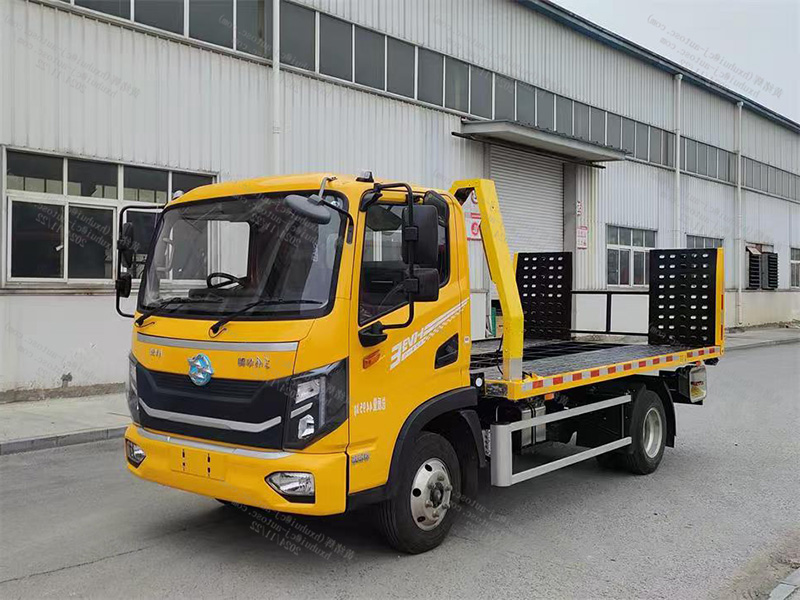
Rollbacks handle the damage-free transport of disabled vehicles. They move cars from point A to point B efficiently. A wrecker truck handles complex extractions. You need boom and cable leverage to pull vehicles from ditches or embankments. Modern units equipped with auto-load wheel-lifts offer both heavy recovery power and damage-free towing capabilities. Rollback trucks can perform certain winching and vehicle-loading tasks, but they are generally less suitable for complex side-pulling or heavy recovery operations unless specifically equipped and rated for those tasks. For vehicles trapped in deep ditches, ravines, or other difficult positions, a properly configured wrecker with a recovery boom and winch system is often more suitable. You need the mechanical advantage of a boom and winch.
Key Wrecker Truck Specifications and Equipment Features
Chassis Selection and Powertrain
Evaluate torque requirements for towing under heavy loads. Horsepower gets you moving. Torque sustains your speed on inclines. Compare engine reliability across major manufacturers like Cummins, Power Stroke, or PACCAR. Transmission choices dictate your low-speed control. Automatic transmissions like Allison provide smooth shifts under load and prevent driveline shock during heavy pulls. Manual transmissions offer precise PTO (Power Take-Off) engagement. Ensure your Front Axle Weight Rating (FAWR) handles the leverage applied when the underlift is loaded. Frame rail strength dictates how much leverage the boom can apply before the chassis twists. Look for high Resisting Bending Moment (RBM) ratings. A double-frame chassis provides the necessary rigidity for heavy-duty rotators.
Boom and Underlift Configurations
Integrated systems combine the boom and underlift into one cohesive unit. This design saves weight and allows for a shorter overall vehicle length. Independent systems allow simultaneous use of the boom and underlift. You can lift a trailer with the boom while towing the tractor with the underlift. Always evaluate how boom capacity drops as it extends. A 20-ton boom does not lift 20 tons at full extension. Read the manufacturer load charts. The angle of the boom also changes the lifting capacity. Operators must understand how to read these charts to prevent structural failure during a lift.
Winch Mechanics and Cable Specifications
Planetary gear winches can provide compact designs and relatively high line speeds, depending on their gear ratios and motor configurations. Worm gear winches may offer different speed and load-control characteristics, but safe load holding depends on the complete winch and braking system. Procurement teams should compare rated line pull, operating speed, braking performance, and manufacturer specifications rather than relying on gear type alone. Assess your wire rope diameter and working load limits. Deep-ditch recoveries often require 150 feet or more of usable cable. Synthetic rope is lighter, safer, and does not develop dangerous wire burrs. Wire rope selection matters just as much as the winch. Independent Wire Rope Core (IWRC) cables resist crushing on the winch drum better than fiber core cables. Inspect cables weekly for broken strands or bird-caging.
Winch Type | Line Speed | Load Holding | Best Application |
|---|---|---|---|
Planetary Gear | Fast | Moderate (relies on mechanical brake) | High-volume, quick clearance recoveries |
Worm Gear | Slow | Superior (inherent gear braking) | Heavy-duty, complex extractions |
In-Cab Technology and Operator Controls
Wireless proportional remotes allow the driver to control the boom from the optimal vantage point. Operators are no longer tethered to the truck's side control panel. This visibility prevents secondary accidents during complex rigging. Evaluate backup cameras and winch-view cameras. Ensure compatibility with fleet management software. Telematics track hydraulic pressure spikes and alert maintenance teams to potential failures. Modern control panels feature diagnostic screens that display hydraulic fluid temperatures and PTO engagement status in real-time.
Storage and Body Material
Your choice of body material impacts payload and longevity. Balance weight savings against structural durability. Toolbox layout dictates scene efficiency. Operators need dedicated snatch block storage, chain racks, and fork holders. Specify LED compartment lighting to find rigging gear safely during night recoveries. Exterior LED work lights must illuminate the entire recovery zone without blinding oncoming traffic.
Material Type | Weight Impact | Durability | Corrosion Resistance |
|---|---|---|---|
Aluminum | Lightweight (Increases Payload) | Moderate (Prone to cracking under stress) | High (Ideal for winter climates) |
Steel | Heavy (Decreases Payload) | Maximum (Best for heavy-duty impacts) | Low (Requires frequent rust treatment) |
Composite | Moderate (Balances weight and strength) | High (Resists dents and impacts) | High (Will never rust) |

Wrecker Truck Purchase and Operating Cost Considerations
New vs. Used Equipment
New units come backed with manufacturer warranties. They feature modern safety systems, the latest hydraulic technology, and emission-compliant engines. Financing a new truck often secures lower interest rates compared to used equipment. Used units present a lower barrier to entry but require rigorous inspection before purchase. You must check the PTO, hydraulic cylinders, and chassis frame for stress fractures. Look for weeping hydraulic seals and worn winch gears. If buying used, demand maintenance records and perform a hydraulic pressure test on the boom cylinders to verify internal seal integrity.
Serviceability and Maintenance Access
A recovery vehicle's design heavily impacts daily operations. Drivers must access hydraulic filters without removing body panels. They need to reach grease zerks easily on the boom and underlift. Proper access ensures equipment longevity and reduces downtime. Check the routing of hydraulic hoses. Hoses exposed to road debris or moving parts fail prematurely. Look for centralized lubrication systems to simplify daily greasing routines. A truck that is difficult to maintain will inevitably suffer from neglected maintenance.
Fuel Efficiency and Route Density
Heavy-duty wreckers consume significantly more fuel than light-duty units. Deploying a Class 8 truck for a Class 4 job erodes profit margins. Match your vehicle class to your specific route density. Urban routes benefit from lighter, more fuel-efficient chassis. Stop-and-go traffic destroys the fuel economy of heavy trucks. Idling time during accident recoveries also burns significant fuel. Specify auxiliary power units (APUs) to run emergency lighting without idling the main engine. Axle ratios play a massive role in fuel economy. A numerically high rear axle ratio provides excellent low-end pulling power but destroys highway fuel mileage. Select an axle ratio that matches your primary operating environment.
Insurance Premiums
Specialized recovery vehicles carry higher insurance premiums. Liability and physical damage coverage costs scale with vehicle size. Heavy-duty wreckers and rotators face the highest rate increases. Factor these monthly premiums into your operational budget. Insurance companies look closely at driver experience and safety records. Equipping your trucks with dash cameras and telematics can lower these premiums. Consult your insurance broker before finalizing a heavy-duty chassis purchase to avoid unexpected overhead costs.
Common Wrecker Truck Operating Risks and Safety Requirements
Vehicle Weight Limits and DOT Compliance
Overloading the rear axle when towing a heavy vehicle causes front-axle lift and a complete loss of steering control. It also triggers DOT fines at weigh stations. Federal bridge laws dictate how weight must be distributed across the axles.
Strictly calculate the Gross Combined Weight Rating (GCWR) for every tow.
Utilize front counterweights to maintain steering axle traction.
Measure overhang accurately, as excessive overhang multiplies the weight transferred to the rear axles.
Train dispatchers to ask for accurate vehicle weights before assigning a truck.
Install onboard weigh scales to monitor axle loads in real-time before hitting the highway.
Hydraulic and PTO Failures
Contaminated hydraulic fluid renders the recovery apparatus useless on a job site. PTO gear failure leaves you stranded with a disabled vehicle blocking traffic. Hydraulic systems operate under extreme pressure and require pristine fluid conditions.
Implement strict preventative maintenance schedules.
Conduct regular fluid analysis to detect internal wear before catastrophic failure.
Enforce comprehensive operator pre-trip inspection protocols every morning.
Check PTO engagement and hydraulic line integrity daily.
Keep spare hydraulic hoses and fittings in the truck's toolboxes for emergency field repairs.
Licensing and Certification
In the United States, CDL requirements for wrecker operators depend on the truck's weight rating or actual weight, the towing configuration, and the applicable federal and state rules. Failing to meet state-specific towing endorsements creates massive liability exposure. Audit your fleet GVWRs against your current driver rosters. Invest in recognized certification programs. Well-trained operators prevent rigging failures. They understand working load limits and proper snatch block usage. Document all training and keep copies of certifications in the driver's personnel file. This documentation protects your company during post-accident investigations and DOT audits.
Conclusion
Choosing a wrecker truck requires matching mechanical capability to business strategy. Begin by defining the heaviest and most complex recovery you intend to perform regularly. Size the wrecker body to that exact requirement. Select a chassis that supports that body without exceeding legal axle limits. Never compromise on safety features or structural integrity.
Execute these next steps to finalize your procurement strategy:
Audit your dispatch logs from the last 12 months to identify your most frequent job types and missed opportunities.
Consult with local commercial truck dealers regarding chassis availability, lead times, and specific axle configurations.
Request live demonstrations of the hydraulic systems and remote controls under a heavy load before signing any purchase orders.
Calculate your required GCWR to ensure strict compliance with federal bridge laws and local weight restrictions.
Review your driver roster to verify that CDL classifications align with your intended chassis weight.
FAQ
Q: What is the difference between a wrecker truck and a standard tow truck?
A: A standard tow truck, like a flatbed, handles simple, damage-free transport of disabled vehicles. A wrecker truck features specialized booms, heavy-duty winches, and underlifts. Operators use these components to extract vehicles from ditches, embankments, or complex accident scenes before towing them away.
Q: Can a wrecker truck provide damage-free towing like a flatbed?
A: Yes, a properly equipped wrecker can transport many vehicles safely using a wheel-lift system that supports the vehicle by its tires. However, the appropriate towing method depends on the vehicle's drivetrain, ground clearance, weight, and manufacturer instructions. Some AWD, 4WD, and electric vehicles may require towing dollies or flatbed transport to avoid drivetrain or vehicle damage.
Q: How much towing capacity do I need for a light-duty wrecker?
A: The required towing capacity depends on the weight and configuration of the vehicles you plan to recover. For light-duty operations involving passenger cars, SUVs, and small commercial vehicles, buyers should compare the manufacturer's rated towing capacity, wheel-lift capacity, chassis weight limits, and underlift specifications. These ratings should be checked together to ensure the selected wrecker is suitable for the intended recovery tasks.
Q: What is an integrated wrecker body?
A: An integrated wrecker body combines the recovery boom and the underlift into a single unit. This design saves weight and improves payload capacity. However, it prevents the operator from using the boom and underlift independently at the same time.
Q: Do I need a CDL to drive a wrecker truck?
A: In the United States, CDL requirements depend on the tow truck's weight rating and the towing configuration. A Class B CDL is generally required for a qualifying single vehicle rated or weighing 26,001 lbs or more, while a Class A CDL may be required for certain heavier towing combinations involving vehicles over 10,000 lbs. Operators should verify the applicable FMCSA rules, state requirements, and any relevant exemptions before operating a wrecker truck.
Q: Which is better for towing: a planetary winch or a worm gear winch?
A: Planetary winches offer faster line speeds, making them ideal for quick, high-volume recoveries. Worm gear winches operate slower but provide superior load-holding capabilities and long-term durability. They are preferable for heavy-duty, complex extraction jobs.
Q: How does boom extension affect a wrecker’s lifting capacity?
A: A wrecker’s lifting capacity decreases significantly as the boom extends. The maximum rated capacity only applies when the boom is fully retracted. Operators must calculate the reduced load limit at full extension to prevent structural failure or chassis tipping.


