


How to Choose a Dump Truck for Mining and Quarry Work
Views: 0 Author: Site Editor Publish Time: 2026-09-24 Origin: Site


Procurement of heavy haulage equipment represents a massive capital expenditure for any surface extraction or quarry operation. This decision directly dictates your baseline cost-per-ton. Mismatching a truck’s specifications to site conditions results in accelerated component wear, production bottlenecks, and inflated operating expenses. Underestimating rolling resistance, ignoring climate variables, or mismatching loader capacity will cripple your daily output. You must establish a structured evaluation framework to navigate equipment specifications effectively. We will compare rigid versus articulated architectures and align technical capabilities with long-term site profitability. You will learn how to match equipment to your specific terrain, meet environmental goals, and ensure strict safety compliance. Selecting the right machine means analyzing haul road profiles, underfoot conditions, and material density. We will break down the exact metrics you need to evaluate before signing any purchase order.
Site-First Specification: The optimal truck is dictated by haul road profiles, underfoot conditions, climate, and material density rather than maximum theoretical payload.
Architecture Alignment: Rigid dump trucks maximize payload on maintained, hard-packed roads, while articulated dump trucks (ADTs) mitigate downtime in soft, uneven, or extreme-weather environments.
Pass-Matching is Critical: A truck’s volumetric capacity must mathematically align with existing loading equipment (typically a 3-to-5 pass match) to prevent idle time at the face.
Long-Term Value Over Initial Price: Long-term value is determined by fuel burn rates, maintenance accessibility, tire life management, and aftermarket dealer support, which often eclipse the initial purchase price within the first three years of operation.
Table of Contents
How Site Conditions Affect Dump Truck Selection
How Haul Roads Affect Truck Performance
Haul road conditions directly affect dump truck efficiency, fuel use, and component life. Road slope, distance, and surface quality determine the required power and drivetrain performance. Soft or damaged roads increase rolling resistance, forcing the truck to use more power and causing higher fuel consumption and mechanical stress. Maintaining smooth haul roads helps improve productivity and reduce operating costs.
Key factors to evaluate:
Road Grade: Steeper slopes require higher engine torque and stronger drive systems.
Rolling Resistance: Soft, muddy, or uneven surfaces increase tire resistance and reduce efficiency.
Road Maintenance: Well-maintained roads reduce fuel consumption and extend tire and drivetrain life.
Choosing Dump Trucks Based on Material and Climate
Material type and weather conditions determine the right dump truck design. Dense materials such as iron ore and granite require stronger bodies with reinforced liners, while lighter materials like coal allow larger dump capacities. Sticky materials can reduce payload efficiency through carryback, so suitable dump body designs are important. Climate conditions also affect truck requirements, including heated bodies for freezing areas and upgraded cooling systems for hot environments.
Key factors to evaluate:
Material Density: Heavy materials require stronger structures and lower volume bodies.
Material Abrasiveness: Wear-resistant liners help extend dump body life.
Climate Conditions: Temperature and weather affect unloading, cooling, and overall reliability.
Loading Equipment Pass-Matching
You cannot select a haul truck in isolation. It must operate in perfect synchronization with your loading equipment. Industry standards dictate a strict 3-to-5 pass match between the loader and the truck. You calculate this by dividing the truck's target payload by the loader's bucket capacity, factoring in material density and bucket fill factors. Mismatched fleets destroy operational economics. Loading a massive truck with a small excavator in seven or more passes ruins cycle time efficiency. The truck spends too much time idling at the face.
Conversely, loading a small truck in just one or two passes with a massive shovel causes severe impact shock. This practice damages the truck's suspension and accelerates structural fatigue. A perfectly pass-matched Dump Truck for Mining and Quarry Work ensures continuous material flow and maximizes fleet utilization. To execute this calculation, take the truck's rated payload and divide it by the loader's payload per pass. The loader's payload per pass is the bucket volume multiplied by the material's loose density, multiplied by the bucket fill factor. If the result is 4.2, you have a solid four-pass match. If the result is 6.8, your loader is too small or your truck is too large.
Rigid vs Articulated Dump Trucks: Which One Is Right?

Rigid Dump Trucks for Large-Scale Mining Operations
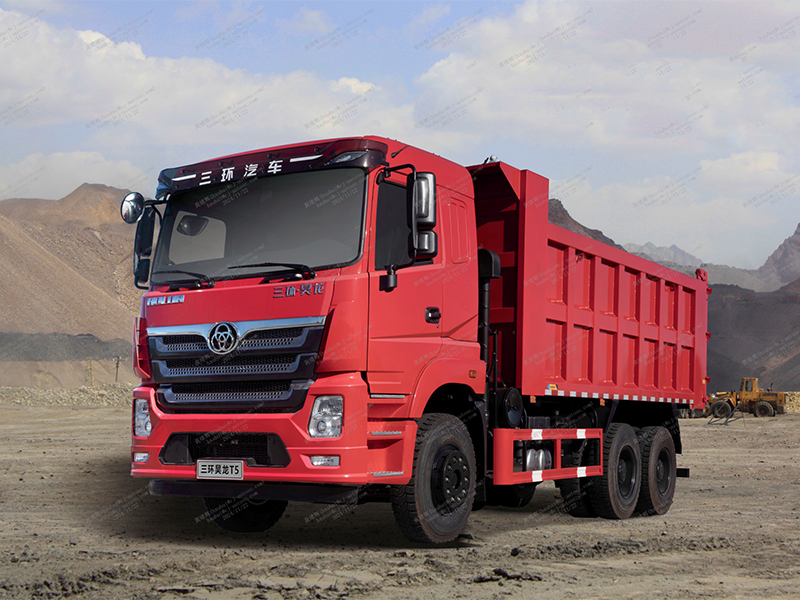
Rigid dump trucks are designed for large mines and quarries with strong, well-maintained roads. They offer high payload capacity, strong frames, and lower cost per ton when operating in suitable conditions. However, they are less effective on muddy or uneven terrain because they rely on rear-wheel drive and require better road maintenance.
Articulated Dump Trucks for Difficult Terrain
Articulated dump trucks are built for challenging environments such as muddy sites, steep slopes, and temporary roads. Their flexible joint design allows better ground contact and improved traction on uneven surfaces. They are easier to maneuver but usually have lower payload capacity and require more specialized maintenance.
Comparing Infrastructure Needs and Truck Capability
Rigid and articulated dump trucks suit different operating conditions. Rigid trucks require higher investment in road construction but deliver better efficiency on stable routes. Articulated trucks reduce the need for road preparation and perform better in difficult environments. The right choice depends on site conditions, project duration, and overall operating costs.
Comparison: Rigid vs. Articulated Dump Trucks | ||
Feature | Rigid Dump Truck (RDT) | Articulated Dump Truck (ADT) |
|---|---|---|
Ideal Terrain | Hard-packed, well-maintained roads | Soft, muddy, uneven, unmaintained roads |
Payload Capacity | Extremely high (40 to 400+ tons) | Moderate (25 to 60 tons) |
Drivetrain | Rear-wheel drive (Mechanical or Electric) | All-wheel drive (Mechanical) |
Maneuverability | Requires wide turning areas | Tight turning radius, highly agile |
Infrastructure Need | High (Graders, water trucks required) | Low (Terrain-agnostic) |
Top Speed | Higher on flat, maintained surfaces | Lower overall, but consistent in mud |
Key Specifications to Evaluate Before Buying
Mechanical vs Electric Drive Systems
Dump trucks mainly use mechanical or electric drive systems depending on working conditions. Mechanical drives provide strong pulling power and are suitable for steep and changing terrain. Electric drives offer smoother operation, better speed control, and improved downhill braking performance, making them ideal for large mines with long-distance hauling routes.
Dump Truck Payload and Body Options
Payload capacity depends on both truck weight limits and dump body volume. Heavy materials require strong bodies with reinforced liners, while lighter materials may need larger-volume designs. Choosing the right body configuration, such as steel liners, rubber liners, or sideboards, helps improve loading efficiency and reduce equipment wear.
Dump Truck Braking and Downhill Control Systems
Heavy dump trucks need advanced braking systems to safely control speed on downhill routes. Retarders and electric braking systems reduce pressure on service brakes, helping prevent overheating and extending brake life. Effective speed control also improves safety and maintains efficient hauling cycles.Fuel Efficiency and Low-Emission Technologies
Fuel consumption is a major part of dump truck operating costs. Choosing an efficient engine and meeting emission standards can reduce long-term expenses. Modern diesel trucks may use systems such as DPF, SCR, and DEF to control emissions. Some operations also consider hybrid, trolley-assist, or electric trucks to reduce fuel use, but these options require suitable site conditions and charging infrastructure.
How to Extend Dump Truck Tire Life
Tires are one of the biggest operating costs for heavy-duty dump trucks. Proper tire selection, correct inflation pressure, and regular road maintenance help prevent early failures. Choose tire compounds based on working conditions, such as heat resistance for long hauls or cut resistance for rocky areas. Managing load, speed, and road conditions can significantly extend tire service life.
Maintenance and Fleet Management Systems
Downtime is the enemy of production. You must evaluate how easily technicians can service the equipment. Look for ground-level service centers. Centralized fluid fill points allow technicians to top off coolant, oil, and hydraulics from a single location without climbing on the machine. This reduces daily walkaround times and significantly improves maintenance safety. Fast-fill fuel systems are mandatory to minimize time spent at the fuel island.
Modern fleets rely heavily on OEM telematics. Systems provide real-time data directly to your dispatch center. You can monitor payload weights, fuel burn rates, tire pressures, and operator behavior instantly. This data allows you to transition from reactive repairs to predictive maintenance. You can schedule component replacements before they fail, maximizing fleet availability and operational efficiency. Tracking the exact payload of every mining dump truck ensures you are maximizing production without violating the 10/10/20 overload rule.
Conclusion
The most profitable haulage asset is not the one with the highest theoretical payload. It is the machine whose architecture, drivetrain, and body configuration perfectly intersect with your site terrain, loader capacity, and haul road conditions. Success requires a methodical alignment of equipment capabilities with the physical realities of your operation. By prioritizing pass-matching, tire management, and dealer support, you secure long-term operational efficiency.
Audit haul roads, climate, and underfoot conditions to determine if rigid or articulated architecture is required.
Calculate volumetric pass-matching with existing loaders to ensure continuous material flow.
Filter technical specifications by TMPH/TKPH tire requirements and dynamic retardation needs.
Base the final decision on local dealer SLA, maintenance accessibility, and long-term operational projections.
Arrange a localized OEM demonstration on your site to validate cycle time assumptions and test operator ergonomics under real-world conditions.
FAQ
Q: What is the average lifespan of a mining dump truck?
A: The operational lifespan heavily depends on maintenance schedules and component rebuilds. Rigid trucks typically operate between 60,000 to 100,000 hours. Achieving this longevity requires strict adherence to OEM maintenance intervals and multiple major component overhauls, including engine and transmission replacements. Articulated trucks generally have shorter lifespans due to harsher operating environments.
Q: How do you match a mining dump truck to an excavator?
A: You use the 3-to-5 pass rule. Divide the truck's target payload by the loader's bucket capacity, factoring in the material's specific density and the bucket's fill factor. A perfect match allows the excavator to fill the truck in exactly three to five passes, minimizing wait times for both machines.
Q: What is the difference between an articulated and rigid dump truck?
A: Articulated trucks feature an oscillating joint connecting the cab to the bed, along with all-wheel drive, allowing them to navigate soft, uneven terrain. Rigid trucks have a fixed chassis and rear-wheel drive, designed for massive payload capacities on hard-packed, well-maintained haul roads.
Q: How much does a standard mining dump truck cost?
A: Costs vary drastically based on payload capacity, drivetrain technology, and custom body configurations. Smaller articulated models represent a lower initial investment, while ultra-class rigid trucks require massive capital outlays. Advanced features like autonomous readiness, specialized bed liners, and electric drive systems also significantly influence the final acquisition value.
Q: Should I buy a new or used mining dump truck for my quarry?
A: Used equipment requires lower initial capital but carries higher risks of unplanned downtime and hidden component wear. New equipment provides comprehensive warranty protection, guaranteed higher availability, and access to the latest fuel efficiency and telematics technologies. Your decision should align with your project's lifespan and maintenance capabilities.
Q: What is the maximum payload of a mining dump truck?
A: Standard quarry trucks typically handle payloads ranging from 40 to 100 metric tons. However, ultra-class haul trucks used in massive open-pit extraction operations can reach staggering capacities of 400 to 450 metric tons per cycle, requiring specialized infrastructure to support their weight.


