


10m³ Garbage Truck: Applications and Selection Guide
Views: 0 Author: Site Editor Publish Time: 2026-11-10 Origin: Site


A 10m3 garbage truck generally refers to a waste collection vehicle with a nominal body or container volume of 10 cubic meters. It may suit residential routes, commercial areas, campuses, and other collection operations where storage capacity must be balanced with vehicle access.
However, 10m³ describes volume. It does not establish the truck’s waste payload, overall dimensions, loading method, or daily collection output.
Before purchasing, confirm what the capacity figure includes and whether the complete vehicle matches your waste stream, containers, collection route, and unloading facility. This guide explains the main checks for selecting a suitable configuration.
Table of Contents
What Does 10m³ Garbage Truck Capacity Mean?
Confirm which volume is being quoted
Suppliers may use capacity figures for the main storage body, loading hopper, or detachable container. These measurements describe different spaces and should be listed separately.
For a compactor truck, ask whether the quoted 10m³ refers to the main body alone and how that volume is measured. Also request the hopper volume and a drawing showing the loading and storage sections.
For a detachable-container vehicle, confirm the container’s internal dimensions and usable volume. A truck carrying a 10m³ container operates differently from a truck with an integrated 10m³ compactor body.
Separate storage volume from waste payload
Two trucks with the same body volume can have different usable payloads. Chassis ratings, body weight, lifting equipment, and load distribution all influence how much waste can be carried.
A preliminary calculation is:
Available waste payload = applicable gross weight limit − ready-to-work vehicle weight
The ready-to-work weight should include the complete vehicle, installed equipment, fuel, crew, and other operating items. Confirm the supplier’s weight definitions before making comparisons.
Individual axle limits and equipment ratings must also be checked. Staying below the gross weight limit alone does not establish that the load is acceptable.
Understand how compaction changes capacity
A compactor reduces the space occupied by suitable waste. This can allow more loose material to enter the body before the available storage space is used.
However, compaction does not increase the permitted vehicle weight. Wet or dense waste may use the available payload before the body is full. Light packaging may fill the body while weight capacity remains.
Quoted compaction ratios should identify the test material and conditions. Avoid estimating route capacity by simply multiplying 10m³ by a claimed ratio.
Where Can a 10m³ Garbage Truck Be Used?
Residential neighborhoods
A 10m³ configuration may suit residential collection where the route needs more storage than a smaller vehicle can provide and the complete truck can access the streets.
Check parked vehicles, turning areas, collection-point spacing, and the space required behind or beside the truck. Body volume alone does not indicate maneuverability.
For routes using wheeled bins, confirm the lifter interface and the maximum loaded bin weight. Mixed bin types may require different attachments or a revised collection procedure.
Commercial districts and local businesses
Shops, offices, restaurants, and markets can produce very different waste streams.
Dry packaging can occupy considerable space. Food-rich waste can create greater weight and liquid-management demands. A truck serving both needs enough usable payload, suitable loading equipment, and an appropriate cleaning arrangement.
Confirm which materials the proposed equipment can accept. Large metal objects, rubble, hazardous waste, and other unsuitable materials require separate assessment and may need different vehicles.
Campuses, industrial parks, and managed properties
Campuses and industrial parks often have defined collection points and internal roads. These conditions can make route planning more predictable.
Check gate widths, loading-bay access, pedestrian activity, operating hours, and container placement. Keep general refuse separate from production waste or regulated materials that require another collection system.
For properties with several waste streams, assess whether separate rounds or dedicated vehicles would better support the collection plan.
Satellite collection near transfer facilities
A 10m³ truck may also serve localized routes that unload at a nearby transfer facility.
The value of this arrangement depends on travel time, queues, operating hours, and unloading compatibility. A smaller vehicle with convenient access to a transfer station may complete a route effectively. Longer disposal journeys can change that comparison.
Use actual route records to compare collection time and transport time before selecting body capacity.
Choose the Loading System Around the Collection Method
Rear-loading compactor trucks
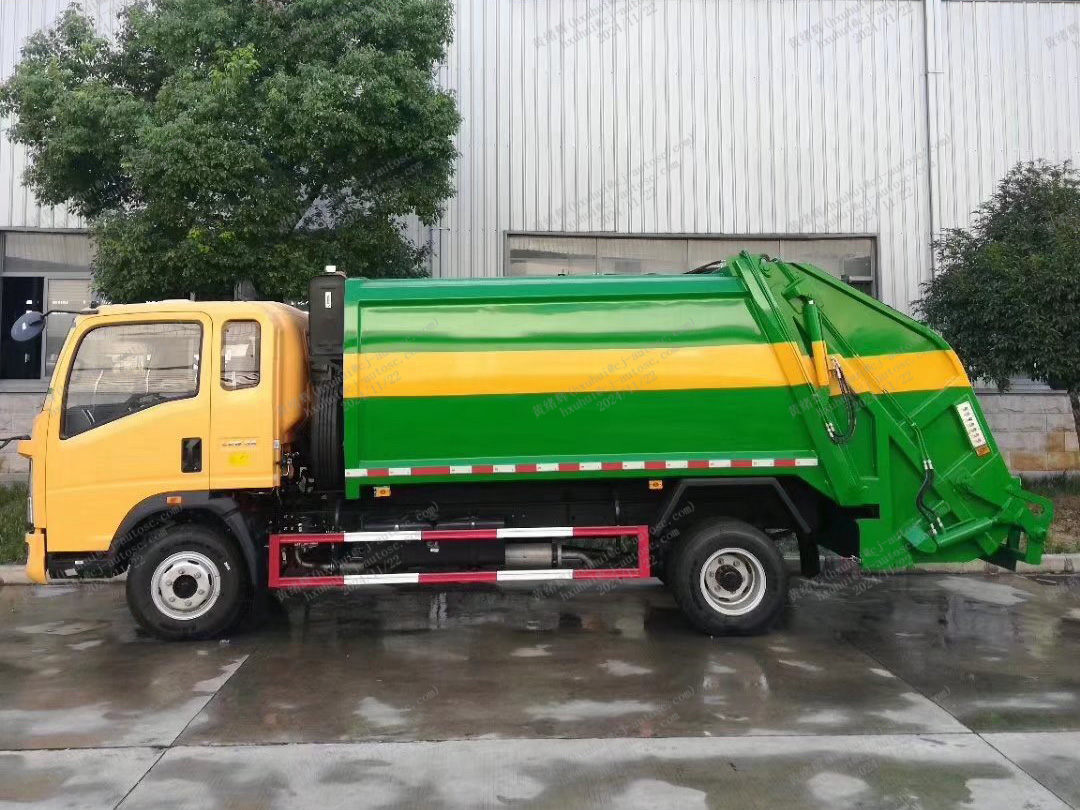
Rear loaders receive waste through a hopper at the back. Depending on the configuration, crews may load bags manually or use lifting equipment for compatible containers.
This arrangement can suit varied collection points, but the proposed lifter must match the bins used on the route. Check loading height, crew working space, visibility, and reversing requirements.
CJ Vehicle’s garbage truck range provides a starting point for discussing collection equipment. Ask which configurations are available for a proposed 10m³ requirement.
Side-loading collection systems
Side-loading systems collect waste from the side of the vehicle. Automated versions use a mechanical arm with compatible carts.
Evaluate cart placement, arm clearance, lifting capacity, and interference from parked vehicles. The system needs enough working space at each collection point.
Single-operator collection depends on the equipment and route conditions. It should be assessed through a collection trial rather than assumed from the loading-system name.
Detachable containers and non-compacting bodies
A vehicle carrying a detachable 10m³ container can suit locations where waste accumulates in a stationary container before collection.
This approach requires suitable container placement and enough space for loading and unloading. Confirm container weight, lifting-system compatibility, loaded vehicle dimensions, and ground conditions.
A non-compacting container and a compactor body should be compared using the same waste quantity and collection schedule. Their nominal volumes do not provide an equivalent measure of collection productivity.
How to Select the Right 10m³ Garbage Truck
Measure route demand before choosing the chassis
Record the waste collected between unloading visits, rather than relying only on daily totals. Include seasonal peaks and changes in waste composition.
Useful purchasing information includes:
Information | Why it matters |
|---|---|
Waste mass per collection round | Helps assess required usable payload |
Waste volume and composition | Indicates whether weight or space is likely to limit collection |
Number and type of containers | Defines loading-equipment requirements |
Distance to the unloading facility | Affects transport time and trip frequency |
Narrowest access and lowest clearance | Helps screen unsuitable vehicle dimensions |
Gradients and road surfaces | Influences chassis and operating requirements |
Available collection hours | Defines the time available for loading, travel, and discharge |
Request a configuration that meets these conditions, then compare it with smaller or larger alternatives.
Verify chassis ratings and weight distribution
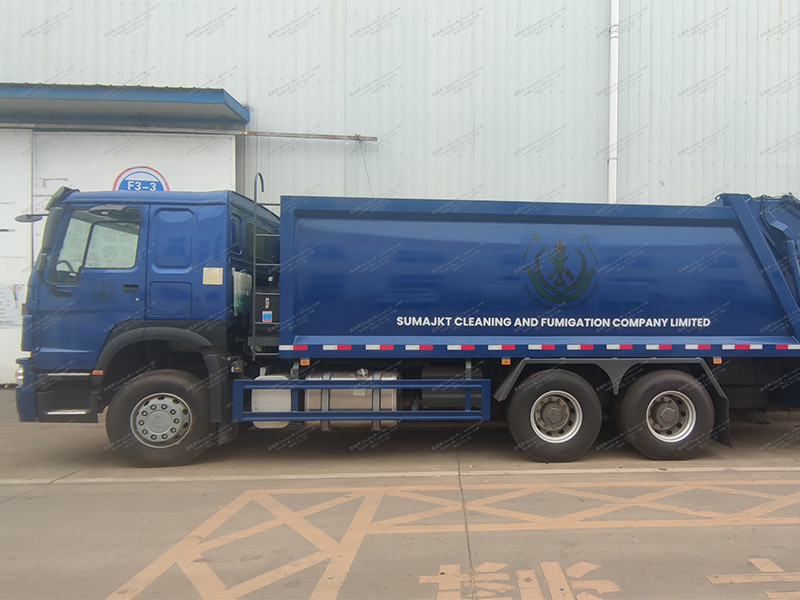
Ask for the complete vehicle’s gross and axle ratings, operating weight, wheelbase, overall dimensions, and expected loaded axle distribution.
A 10m³ body does not automatically require one particular horsepower range or chassis weight class. The body design, hydraulic demand, route gradients, and required payload all affect selection.
Also confirm body mounting, rear overhang, ground clearance, and access to chassis service points. Additional equipment should be included in the weight assessment.
Check bin compatibility and hydraulic performance
Provide the supplier with bin photographs, dimensions, lifting interfaces, and maximum loaded weights. A statement such as “suitable for standard bins” is not enough to establish compatibility.
For a compactor, request the packing-cycle specification and ask how performance is measured. Bin lifting, packing, and unloading are separate operations with different cycle times.
Evaluate the equipment under representative conditions where possible. Do not increase hydraulic pressure or change operating settings to pursue a higher packing rate.
Inspect liquid containment and unloading clearance
For wet mixed waste, review tailgate seals, drainage channels, liquid storage, cleaning access, and corrosion protection.
Confirm the liquid collection capacity and the procedure for monitoring and emptying it. A sealed-looking body should not be assumed to carry unrestricted free liquid.
At the unloading facility, check both travel clearance and the space needed during operation. Raised tailgates, tipping bodies, and container-handling equipment can extend beyond the vehicle’s normal travel envelope.
Compare maintenance support and total operating cost
Compare quotations using the same route assumptions. Include fuel or energy, crew requirements, disposal trips, routine servicing, wear parts, and expected downtime.
Request written information on:
Chassis and body warranty responsibilities.
Operating and maintenance manuals.
Recommended spare parts and component identification.
Parts availability and service arrangements.
Inspection, handover, and operator familiarization.
Configuration documents needed for destination-market review.
For daily operation, follow the model’s inspection schedule. Typical checks cover visible hydraulic damage, body and lifter condition, tailgate closures, liquid systems, lights, warnings, and supplied safety controls. Cleaning and maintenance must follow the prescribed isolation procedure.
Prepare a quotation brief
When discussing a 10m³ requirement, provide the destination, waste stream, collection quantity, bin details, route restrictions, and unloading arrangements.
Ask the supplier to confirm the offered capacity, body type, chassis, usable payload assessment, equipment inclusions, and delivery terms.
Contact CJ Vehicle with these details to discuss available garbage truck configurations and request a quotation based on your collection operation.
Frequently Asked Questions
How many tonnes can a 10m³ garbage truck carry?
There is no fixed conversion from 10m³ to tonnes. Usable payload depends on the complete vehicle’s weight, gross and axle limits, equipment ratings, and load distribution. Waste density affects how quickly that allowance is used.
Is a 10m³ garbage truck suitable for narrow streets?
It may be, but access depends on the complete vehicle’s width, length, wheelbase, turning path, and rear overhang. Loading equipment also needs working space. Check the proposed vehicle against the actual route.
Can a 10m³ truck collect wet food waste?
Only if the equipment is suitable for that waste stream. Confirm payload, liquid containment, sealing, cleaning access, and the approved operating procedure. Wet waste can reach weight limits before the body fills.
Can a 10m³ compactor replace a larger garbage truck?
It depends on waste quantity, collection time, access, and disposal distance. Compare trips and completed collection rounds using actual route data. A smaller body may require more unloading visits.
What should I request before ordering?
Request a configuration-specific technical sheet, capacity definitions, complete vehicle weight, axle information, bin compatibility details, operating manuals, warranty terms, and quotation inclusions. Confirm the exact 10m³ configuration in writing.


