


4x2 vs 6x4 Trucks: What’s the Difference?
Views: 0 Author: Site Editor Publish Time: 2026-11-10 Origin: Site


The main difference between 4x2 vs 6x4 trucks is the number of axles and driven wheel positions. A typical 4x2 truck has two axles with one driven axle. A typical 6x4 truck has three axles with two driven rear axles.
This difference affects traction, weight distribution, vehicle mass, maintenance, and operating costs. The right configuration depends on the load and route.
A 4x2 can be suitable for both distribution work and substantial highway transport within its approved ratings. A 6x4 may be preferable when the operation needs tandem drive axles for traction or load distribution. Compare the completed vehicles against the same transport task before purchasing.
Table of Contents
What Do 4x2 and 6x4 Mean?
Understanding the axle formula
The first number represents nominal wheel positions, counted as two per axle. The second represents the driven positions.
Dual tires at one wheel position count as one position in this formula. A truck’s actual tire count can therefore exceed the first number.
Configuration | Total axles | Driven axles | Common arrangement |
|---|---|---|---|
4x2 | 2 | 1 | Front steering axle and rear drive axle |
6x4 | 3 | 2 | Front steering axle and two rear drive axles |
6x2 | 3 | 1 | Front steering axle, one drive axle, and one non-driven axle |
The designation describes the axle arrangement. Engine output, body type, permitted payload, and differential-lock equipment require separate specifications.
How a typical 4x2 works
A conventional rear-drive 4x2 sends power through one rear axle. Its simpler driveline generally has fewer components than a comparable tandem-drive arrangement.
This can help reduce chassis mass, servicing requirements, and mechanical losses. Depending on the vehicle, a 4x2 may be configured as a rigid truck or a tractor pulling a semitrailer.
Select it using its actual axle, chassis, and combination ratings. The 4x2 designation alone does not restrict it to light freight.
How a typical 6x4 works
A conventional 6x4 drives both rear axles. The tandem driveline distributes power between them, with the exact behavior determined by the differential and control arrangement.
Inter-axle and cross-axle differential locks, where fitted, perform different functions. Confirm the equipment available and follow the manufacturer’s operating instructions.
Both driven rear axles can contribute to propulsion when load and grip are available. Actual traction depends on tires, surface conditions, axle loading, suspension, and differential behavior.

Compare Traction, Payload, and Maneuverability
Traction on slopes and loose surfaces
A 6x4 can offer an advantage where loaded starts and low-grip surfaces demand more driven contact positions. Examples include repeated access to gravel yards, construction areas, or uneven industrial sites.
However, extra driven axles cannot compensate for unsuitable tires, inadequate ground clearance, or poor loading. A 6x4 also retains a non-driven front axle in its typical arrangement.
For paved-road operation, assess whether a 4x2 provides adequate traction under the actual load and weather conditions. Consider slippery delivery ramps and unladen return trips as well as normal cruising.
Hill performance also depends on engine torque, transmission ratios, final-drive ratio, cooling, and operating mass.
Payload and load distribution
The extra axle on a 6x4 can provide additional load-support capability where the vehicle design and local rules permit it.
At the same time, the additional axle, suspension, wheels, and driveline add vehicle weight. Compare usable payload using the complete configuration.
Available cargo allowance = applicable operating mass limit − vehicle mass ready for service, excluding cargo
Check individual axle limits and cargo placement as well. For a tractor, include the trailer’s imposed load and verify the complete combination.
A 6x4 does not automatically provide a fixed payload increase over a 4x2. The outcome depends on the applicable limits and completed vehicle weights.
Maneuverability and tire scrub
A 4x2 may offer an advantage in confined spaces when its wheelbase and steering geometry suit the route. Confirm turning-circle figures and swept-path clearance for the quoted vehicle.
A tandem rear group can generate tire scrub in tight turns. Its effect depends on axle spacing, suspension, loading, tires, and the maneuver.
For tractor-trailer combinations, trailer length, axle layout, and coupling position also influence maneuverability. Test warehouse entrances, delivery yards, and parking arrangements using the complete combination.
Stability and braking
Assess stability separately from the drive designation. Center-of-gravity height, suspension, track width, cargo restraint, speed, and trailer behavior all matter.
More driven axles do not establish shorter braking distances. Review the braking system, tires, load distribution, auxiliary braking, and the route’s downhill demands.
Operating Costs and Best-Fit Applications
Compare fuel use under equivalent conditions
A comparable 4x2 often offers lower vehicle mass and fewer driveline components. These can support efficient paved-road operation when its capacity and traction meet the duty.
A 6x4 adds components and wheel positions, which can increase operating costs. Its additional capability may still produce better business results if it prevents access problems or supports the required loading plan.
Compare fuel consumption at the same useful workload, route, speed, body or trailer, and operating conditions. Request model-specific data or conduct a representative trial.
There is no universal fuel-consumption percentage that applies to every 4x2 and 6x4 comparison.
Include maintenance and availability
For a 6x4, account for the additional axle’s brakes, suspension, bearings, seals, and driveline components. Review tire matching and replacement requirements against the manufacturer’s guidance.
For either layout, check local parts supply, diagnostic access, service intervals, and workshop capability. A lower purchase price can lose its advantage if repairs create extended downtime.
Compare tolls, insurance, and expected resale value using the operating market and actual vehicle. These costs vary by route and fleet circumstances.
When a 4x2 is worth considering
A 4x2 is a practical candidate when:
Approved axle and combination ratings cover the load.
Routes provide adequate grip for the planned operation.
Low operating mass or simpler servicing is valuable.
Vehicle dimensions suit customer and warehouse access.
Trials confirm acceptable performance at typical and peak loads.
Applications may include distribution, regional freight, highway tractor work, and some construction-related transport.
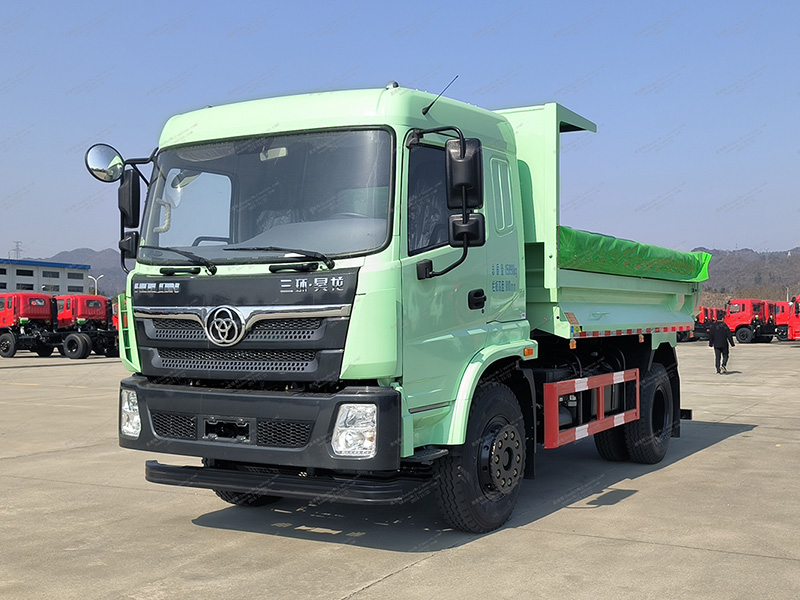
CJ Vehicle lists a Tri-Ring 4x2 truck. Confirm its exact body, ratings, and configuration for your application.
When a 6x4 is worth considering
A 6x4 is a practical candidate when:
The loading plan benefits from tandem rear-axle support.
Frequent low-grip starts justify two driven axles.
The vehicle repeatedly enters demanding loading sites.
Operating conditions justify the additional driveline and maintenance.
The completed vehicle meets route and destination requirements.
Applications can include construction haulage, heavy transport, and highway operations where the specified configuration suits local requirements.
CJ Vehicle also lists the Dongfeng KX 6x4 tractor. Request documentation for the exact export version before comparing its capacity or equipment.
Where a 6x2 fits
A 6x2 adds a third axle while retaining one driven axle. The non-driven axle may be positioned ahead of or behind the drive axle, with steering or lifting functions on some models.
It can be worth evaluating where additional load support is useful but tandem drive is unnecessary. Check traction, load-transfer behavior, and the approved use of any lift axle.
Compare the actual design rather than assuming every 6x2 has identical performance.
How to Choose the Right Configuration
Prepare a route and load brief
Give the supplier a consistent set of requirements.
Requirement | Information to provide |
|---|---|
Vehicle duty | Rigid truck or tractor-trailer operation |
Load | Typical and maximum weights, dimensions, and loading positions |
Route | Distance, gradients, surfaces, and low-grip access points |
Facilities | Turning space, loading method, and clearance restrictions |
Environment | Temperature, rainfall, dust, and altitude |
Operation | Annual mileage, loaded running, and empty returns |
Market | Destination country and required vehicle approvals |
For tractor combinations, provide trailer details and expected imposed loads. For rigid trucks, include the completed body and installed equipment.
Verify the quoted specification
Ask for gross and combination ratings, individual axle ratings, operating mass, wheelbase, turning dimensions, axle ratio, suspension, tires, and differential-lock equipment.
Compare usable capacity and route performance using consistent assumptions. Confirm import eligibility and operating requirements in the destination market.
Treat advertised model information as a starting point. The purchase specification and supporting documents should identify the configuration being supplied.
Test the complete duty
Where feasible, evaluate a representative vehicle with the intended load. Check loaded starts, low-speed maneuvering, site access, braking behavior, and unloading arrangements.
For an existing fleet, review axle-weighing records, fuel data, tire wear, traction incidents, and downtime. These records can show whether the next purchase needs additional capability or a more efficient specification.
Make the final decision using cost per completed transport task alongside capacity, access, and support.
Frequently Asked Questions
1. Does 4x2 mean the truck has four tires?
No. The formula counts nominal wheel positions. Dual tires at one position can increase the actual tire count without changing the 4x2 designation.
2. Can a 4x2 truck pull a heavy semitrailer?
Yes, when the tractor, coupling, axle loads, trailer, and complete combination meet the applicable ratings and operating limits. Check the specific configuration.
3. Is a 6x4 always better in snow or mud?
Two driven rear axles can help, but tires, axle loading, clearance, differential equipment, and surface conditions determine actual performance. Assess the complete vehicle.
4. How much more fuel does a 6x4 use?
The difference varies by vehicle and duty. Compare equivalent loads, routes, speeds, and equipment using supplier data or fleet trials.
5. What is the difference between 6x2 and 6x4?
Both typically have three axles. A 6x2 drives one axle, while a 6x4 drives two. The additional driven axle can improve traction in suitable conditions while adding driveline components.
Request a Truck Configuration Review
Send CJ Vehicle your load details, route conditions, intended body or trailer, destination country, and expected annual mileage.
Contact CJ Vehicle to discuss available configurations and request a quotation for your operation.


