


Dump Truck vs Cargo Truck: What’s the Difference?
Views: 0 Author: Site Editor Publish Time: 2026-11-10 Origin: Site


The main difference in a dump truck vs cargo truck comparison is how the vehicle carries and unloads its freight. A dump truck uses a tipping body to discharge suitable bulk materials. A general cargo truck carries goods on a body selected for their dimensions, protection and handling requirements.
Cargo trucks are not limited to enclosed boxes. Flatbeds, dropsides and curtainsiders also serve freight applications.
For buyers, the decision starts with the material and delivery process. Compare loading access, usable payload, unloading facilities and complete operating cost before choosing the chassis and body.
Table of Contents
Dump Truck vs Cargo Truck: The Main Differences
What defines a dump truck?
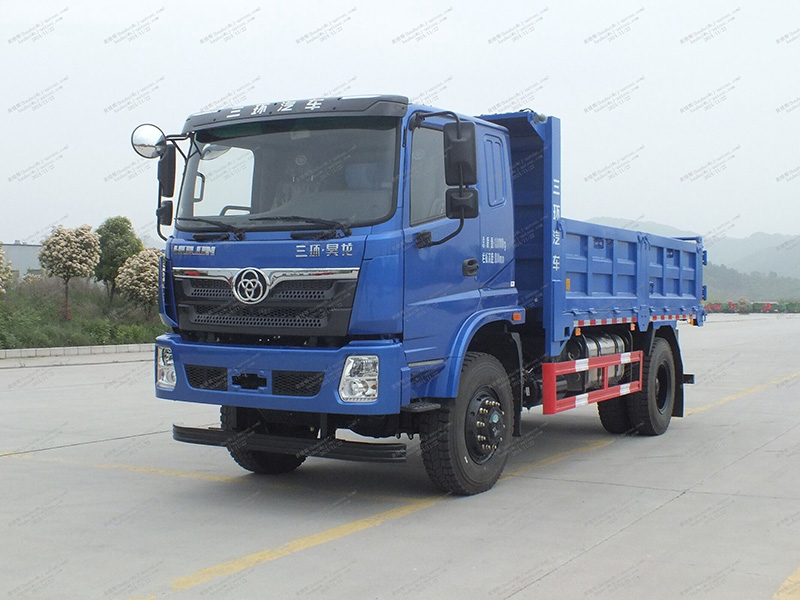
A dump truck has a body designed to tilt and discharge material by gravity. Common applications include soil, aggregates and suitable construction debris.
Many road-going tippers use hydraulic lifting equipment powered through a power take-off, or PTO. The exact power source, hoist arrangement and body design depend on the vehicle.
Rear tipping is common, but side-tipping and other arrangements also exist. Do not assume every dump truck uses the same hinge, cylinder or tailgate system.
CJ Vehicle’s dump truck range provides options to discuss for construction and bulk-material transport.
What defines a general cargo truck?
A cargo truck carries freight on a body selected for the goods and handling method.
An enclosed box can protect packaged goods from direct weather exposure. A flatbed supports side or overhead loading, while a curtainsider offers side access within its specified body system.
Refrigerated bodies add insulation and temperature-control equipment for a defined transport duty.
The term “cargo truck” does not establish a particular payload, chassis size or body material. Those characteristics need a model-specific specification.
Compare the handling systems
A tipping body can discharge suitable loose material without removing individual items. A general cargo body supports goods that need controlled placement and handling.
Comparison factor | Dump truck | General cargo truck |
|---|---|---|
Typical freight | Suitable loose bulk materials | Packaged, palletized, crated or individually handled goods |
Body | Tipping body with compatible discharge arrangement | Box, flatbed, dropside, curtainsider or specialized body |
Unloading | Gravity discharge through the tipping system | Forklift, crane, tail lift, dock or other handling method |
Main body priorities | Material flow, abrasion and loading impact | Usable dimensions, floor loading and cargo protection |
Site requirements | Suitable ground and raised-body clearance | Suitable handling equipment, access and working space |
Equipment to inspect | Hoist, hinges, subframe and tailgate | Floor, doors, restraint points and fitted handling equipment |
Match the Body to the Load and Destination
Decide whether the freight can be tipped
Loose sand and palletized cement bags require different handling even when they serve the same construction project.
Tipping may suit one material while damaging another. Packaged products, machinery and fragile goods generally need controlled unloading.
Confirm the material’s condition at collection and the required condition at delivery. A body should support the complete handling process, not merely accommodate the load during travel.
Check both weight and volume
Dump trucks do not always reach their weight limit first, and cargo trucks do not always run out of space first.
Dense packaged products can exhaust payload before filling a box. Lightweight mulch or debris can fill a tipping body before reaching its permitted mass.
For loose bulk materials, calculate:
Material mass = loaded volume × representative bulk density.
For example, an assumed density of 1.6 t/m³ gives a 12.8 t load in 8 m³. This is an illustrative calculation, not a customer vehicle capacity.
Use material data that reflect moisture and loading condition.
Calculate payload from the complete vehicle
Operating tare includes the chassis, fitted body, equipment and relevant operating allowances.
A steel tipping body and lifting system may add considerable weight. However, a refrigerated cargo body, crane or heavy tail lift also changes tare.
Compare completed vehicles rather than assuming one body category always provides more payload.
The load must satisfy applicable gross-weight, axle, tire and body limits. Body space alone is not permission to add more material.
Specify protection according to the goods
An ordinary enclosed box protects against direct rain and road spray, but it does not provide complete environmental isolation or active refrigeration.
Likewise, a tipping body may use covering or insulation appropriate to the material. Asphalt transport, for example, requires a different assessment from ordinary aggregate hauling.
Specify the actual requirements for moisture, dust, temperature and contamination control. Ask the supplier how the proposed body addresses them.
Compare Chassis, Unloading and Operating Requirements
Match the chassis to its duty cycle
Loading impact, road condition, operating mass and body attachment influence chassis selection.
A dump application may require equipment suited to repeated loading and tipping. A cargo application may also involve severe conditions, concentrated loads or hydraulic equipment.
Frame strength should be evaluated using the manufacturer’s body-building requirements and complete design. Resisting bending moment, or RBM, is not by itself a guarantee of acceptable tipping performance or torsional behavior.
Do not specify double-frame construction, a particular axle ratio or differential locks solely from the vehicle name.
Confirm hydraulic and PTO requirements
Many tipping systems use a PTO-driven hydraulic pump, but this is not the only possible arrangement.
Cargo trucks may also require PTO equipment for a crane or another attachment. Tail lifts can use different hydraulic power arrangements.
Specify the equipment duty, operating sequence and compatibility with the chassis. Request confirmation of the proposed pump, reservoir, controls and installation.
Avoid assuming that every cargo truck has no PTO or uses only a small electric hydraulic unit.
Measure the complete handling cycle
A tipping system may reduce discharge time for suitable material. The complete cycle still includes arrival, queuing, positioning, discharge and departure.
Cargo handling time depends on pallet count, access, equipment availability and the receiving facility. Neither vehicle type has a universal unloading time.
Measure the actual operation before estimating productivity. A faster discharge mechanism provides limited benefit if most of the shift is spent waiting at the loader or receiving gate.
Assess the working area
Tipping requires firm, level ground capable of supporting the vehicle and load, with sufficient overhead clearance.
Sticky or unevenly releasing material can affect stability. Follow the vehicle and tipping-system instructions rather than driving or jerking the truck to free a stuck load.
Cargo handling needs suitable floors, restraints and equipment. Check for shifted freight before removing restraints or opening access where goods could fall.
Suspension settings and operating limits must follow the specific manufacturer’s procedure. There is no universal slope angle or instruction to deflate every air suspension.
Choose the Vehicle That Fits the Contract
Select tipping equipment for repeatable bulk work
A dump truck is a strong candidate when the regular task involves suitable loose materials and the receiving site supports tipping.
Compare body material, loading impact, discharge behavior, tare and maintenance access.
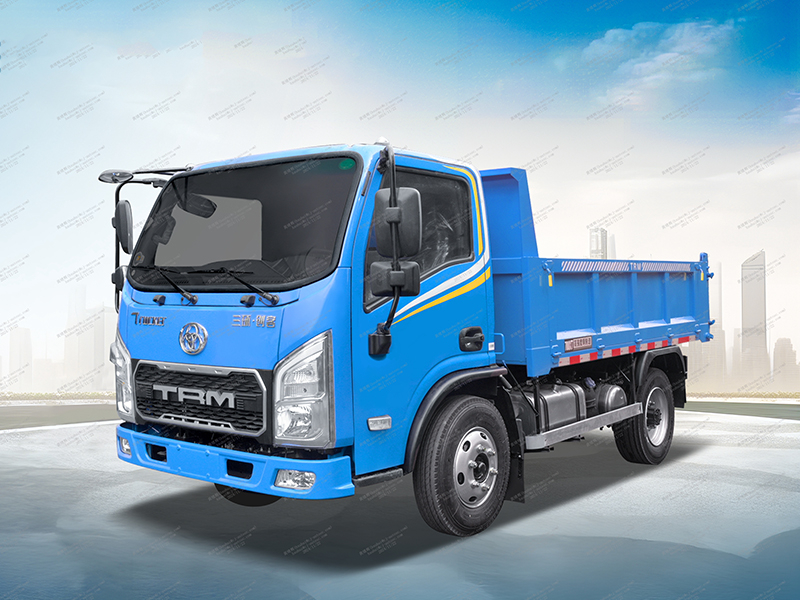
CJ Vehicle lists the Haolong 4x2 dump truck alongside other configurations. Confirm the final specification and destination requirements for the proposed vehicle.
A larger body or heavier chassis should be justified by usable capacity and the working environment.
Select a cargo body for controlled freight handling
Choose a general cargo configuration when the goods need enclosure, side loading, individual handling or protected delivery.
Compare door openings, internal dimensions, restraint points and floor loading. Include the requirements of forklifts, pallet trucks and tail lifts where relevant.
CJ Vehicle’s commercial vehicle overview describes cargo and other commercial transport applications. Request confirmation of the body and equipment included in a proposal.
Evaluate interchangeable bodies separately
Hook-lift or other interchangeable-body systems can support changing tasks with compatible containers or bodies.
Their value depends on utilization, handling space, storage locations and equipment compatibility.
Include the lifting mechanism, body subframes and operating procedure in the payload and cost assessment. Such systems do not automatically reproduce every capability of a dedicated tipper or fixed cargo truck.
Confirm the required solution and supplier availability before treating it as a replacement for two vehicles.
Compare cost using the correct output measure
Include acquisition, fuel, drivers, maintenance, insurance, downtime and body-specific costs.
For bulk work, cost per delivered tonne may be useful. For distribution, cost per shipment or successful delivery may provide a better comparison.
Avoid comparing different contracts only by revenue per trip. Include waiting, empty return travel, handling charges and saleable payload.
Request quotations against the same operating brief so that differences in included equipment remain visible.
Prepare an application-based RFQ
Provide the material or goods, representative mass and dimensions, loading method and unloading facilities.
Add the destination, route distance, gradients, road condition, access limits and expected daily cycles.
Ask for the completed vehicle’s operating tare, ratings, body drawing, dimensions and handling-system information. Include drive position, emissions requirements, order quantity and required delivery schedule.
Frequently Asked Questions
Can a cargo chassis be converted into a dump truck?
Possibly, but compatibility requires engineering review. Check the chassis manufacturer’s body-building requirements, ratings, frame, wheelbase, axle distribution and lifting-system installation. Reinforcing the frame alone does not establish a suitable conversion.
Which vehicle carries more payload?
Compare completed vehicles with the same operating permissions. Body weight and fitted equipment can change the result substantially. Neither category guarantees greater payload.
Does every dump truck need a heavy-vehicle license?
Licensing depends on the jurisdiction, vehicle or combination weight and operating activity. The body name alone does not determine the requirement. Confirm the rules for the exact vehicle and destination.
Can a cargo truck unload without a loading dock?
Yes, if suitable equipment and procedures are provided. Options may include a tail lift, crane, forklift or ramps, depending on the freight. Confirm capacities, access and working space before selecting the arrangement.
Can one truck handle both bulk materials and packaged goods?
Some approved configurations or interchangeable-body systems can support both tasks. Evaluate cleanliness, restraint, payload, body compatibility and handling separately. Do not assume a standard tipping body is suitable for general packaged freight.
To compare suitable configurations, contact CJ Vehicle with your load, route and unloading requirements. Request a proposal covering the chassis, body, handling equipment and destination documentation.


