


Dump Truck Payload Capacity Explained: Weight, Volume and Truck Size
Views: 0 Author: Site Editor Publish Time: 2026-09-24 Origin: Site


Accurate payload management dictates fleet profitability. Miscalculate your loads, and you face severe DOT fines, accelerated mechanical wear, or lost revenue from running light. Procurement managers and owner-operators fight this battle daily. You have to balance Gross Vehicle Weight Rating (GVWR), body volume in cubic yards, and legal axle limits for specific routes. Picking the right vehicle demands strict mathematical evaluation. You must assess weight limitations, material density, and chassis configurations to guarantee maximum legal yield on every single trip. Understanding exactly how to calculate and optimize your dump truck payload capacity forms the foundation of a profitable hauling operation. Guesswork at the loader bucket leads to blown tires and snapped frames. We will break down the exact numbers, formulas, and specs you need to keep your trucks legal and earning.
The Baseline Formula: Dump truck payload capacity is strictly defined by subtracting the vehicle's curb weight (empty weight) from its GVWR.
Volume vs. Weight Reality: A truck's cubic yardage dictates physical volume, but material density dictates actual weight; high-density materials will max out weight limits long before the dump box is physically full.
Compliance Dictates Capacity: Legal on-road payload is governed by axle configurations and the Federal Bridge Gross Weight Formula, not just the manufacturer's mechanical rating.
Spec'ing for ROI: Maximizing payload requires evaluating trade-offs between body materials (aluminum vs. steel) and axle counts (single vs. multi-axle) based on primary haul materials.
Table of Contents
How to Calculate Dump Truck Payload Capacity
GVWR vs. Curb Weight
Gross Vehicle Weight Rating (GVWR) represents the absolute maximum safe operating weight specified by the chassis manufacturer. This rating encompasses the entire vehicle system. It includes the bare chassis, the upfitted body, all operational fluids, the driver, and the cargo. Manufacturers determine this number by identifying the weakest structural or mechanical link in the vehicle. This could be the axles, the suspension system, the frame rails, or the braking capacity. You cannot safely or legally exceed this engineered limit under any circumstances.
Curb weight is the total weight of the fully assembled, empty vehicle. This includes the chassis and the upfitted dump body. It also accounts for full fluid tanks, including diesel, diesel exhaust fluid (DEF), and hydraulic oil. A standard 100-gallon fuel tank adds over 700 pounds to your curb weight alone. Every upfitting choice directly impacts this baseline weight. Specifying thicker steel floors for demolition work increases durability but adds significant weight. Heavy-duty hydraulic hoists, automated tarp systems, and heavy-duty bumpers all increase the curb weight. Every pound added to the empty truck is a pound subtracted from your available payload.
Dump Truck Payload Calculation Formula
Calculating your baseline capacity requires a straightforward mathematical formula. You take the GVWR and subtract the Curb Weight to find your Maximum Mechanical Payload Capacity. If a truck has a GVWR of 66,000 pounds and a curb weight of 28,000 pounds, the mechanical payload capacity is 38,000 pounds, or 19 tons. This figure represents what the axles and frame can physically handle without structural failure.
You must differentiate between mechanical payload capacity and legal payload capacity. Mechanical capacity is dictated by the manufacturer's engineering. Legal capacity is dictated by local laws governing public roads. Your truck might mechanically handle 20 tons, but local axle weight restrictions might limit you to 15 tons on a specific highway. Operating based on estimated curb weights rather than certified scale weights introduces massive operational risk. Factory specification sheets often list base weights without accounting for aftermarket additions like PTOs or heavy-duty mudflaps. Always weigh the fully upfitted, fueled truck on a certified scale to establish an accurate baseline capacity.
To establish a reliable payload baseline for a new addition to your fleet, follow this exact sequence:
Fill all fuel, DEF, and hydraulic tanks to maximum capacity.
Equip the cab with all standard gear, chains, and the primary driver.
Drive the vehicle onto a certified CAT scale to record the true steer and drive axle weights.
Subtract this documented total curb weight from the manufacturer's stamped GVWR on the door tag.
Cross-reference the resulting mechanical payload against your state's bridge formula charts for your specific axle spacing.
Weight vs Volume: How Much Material Can Your Truck Carry?
How Material Density Affects Dump Truck Capacity
Dump truck capacity depends on both volume and material weight. A full dump box does not always mean maximum payload because different materials have different densities. Heavy materials like wet gravel can reach weight limits before the truck is full, while lighter materials allow larger volumes. Always calculate loading capacity based on material density to avoid overloading.

How to Calculate Dump Truck Bed Volume
Dump truck volume is calculated using the inside length, width, and height of the dump body. Accurate measurements help determine the correct loading capacity and prevent incorrect material estimates. Sideboards can increase volume for lightweight materials, but they should not be used to carry heavy materials because they may cause overloading and safety risks.
Common Material Weights and Payload Impact
Material weight can change significantly depending on moisture and conditions. Wet soil, sand, and gravel can become much heavier after rain, increasing the risk of exceeding legal limits. Operators should consider material type and weather conditions when planning loads to maintain safe and efficient hauling.
Material Type | Condition | Estimated Weight per Cubic Yard (lbs) | Impact on 15-Yard Box Payload (Tons) |
|---|---|---|---|
Topsoil | Dry | 2,000 | 15.0 |
Topsoil | Wet | 2,400 | 18.0 |
Sand | Dry | 2,600 | 19.5 |
Sand | Wet | 3,100 | 23.2 |
Gravel (Crushed Stone) | Dry | 2,800 | 21.0 |
Asphalt | Standard Mix | 3,900 | 29.2 |
Wood Mulch | Dry | 800 | 6.0 |
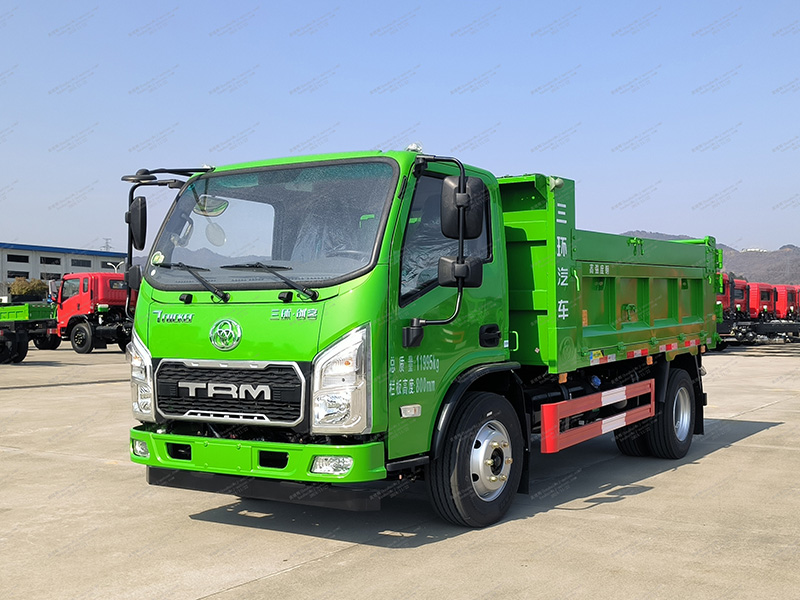
Dump Truck Sizes and Axle Options Explained
Dump Truck Capacity Comparison Chart
Selecting the right chassis requires understanding standard nomenclature and baseline limits. The following chart maps common configurations to average payload limits, assuming standard legal road restrictions. Keep in mind that specific state laws will alter these maximums.
Axle Configuration | Average GVWR (lbs) | Average Payload (Tons) | Average Volume (Cubic Yards) |
|---|---|---|---|
4x2 (Single-Axle) | 26,000 - 33,000 | 5 - 12 | 5 - 10 |
6x4 (Tandem-Axle) | 50,000 - 60,000 | 13 - 18 | 10 - 14 |
8x4+ (Tri/Quad-Axle) | 70,000 - 80,000+ | 18 - 25+ | 14 - 20+ |
4x2 Single-Axle Dump Trucks
4x2 dump trucks are designed for lighter loads and tight working areas. They usually carry around 5–12 tons and are commonly used for urban construction, landscaping, and small job sites. Their shorter wheelbase provides excellent maneuverability, while lower fuel use and simpler maintenance reduce operating costs. However, they are not suitable for heavy-duty hauling that requires larger payload capacity.
6x4 Tandem-Axle Dump Trucks
6x4 dump trucks are widely used in construction and material hauling due to their higher payload capacity and stronger traction. With two rear drive axles, they handle heavier loads, rough roads, muddy sites, and steep grades more effectively. They provide a good balance between carrying capacity, durability, and job-site flexibility, making them a common choice for commercial hauling operations.
8x4 Multi-Axle Dump Trucks for Heavy Loads
Heavy-haul operations require multi-axle configurations. Tri-axle and quad-axle trucks often feature a GVWR exceeding 70,000 pounds, depending heavily on state laws. Payload capacity ranges from 18 to 25 tons or more. These setups incorporate drop axles, also known as pusher or tag axles, which can be raised or lowered pneumatically from the cab.
These massive vehicles are ideal for long-haul aggregate transport, heavy demolition, and continuous paving operations. They excel in scenarios where moving maximum tonnage per trip is the primary metric for success. The air pressure on the lift axles can be adjusted to transfer weight back to the steer axle or drive axles as needed.
A multi-axle Dump Truck maximizes legal highway payload by distributing the heavy load across more axles and a longer wheelbase. However, this capacity comes with trade-offs. Multi-axle trucks increase maintenance complexity. They require more tires, more brake components, and heavier suspensions. The additional axles also increase the vehicle's tare weight, meaning you burn more fuel even when running empty. They also suffer from severe tire scrub when turning sharply, unless equipped with steerable lift axles.
Articulated vs. Rigid Dump Trucks (Off-Highway)
On-highway trucks differ fundamentally from off-highway equipment. Articulated dump trucks (ADTs) and rigid haulers operate exclusively in closed environments like mines, quarries, and massive earthmoving sites. They do not travel on public roads.
Because they do not operate on public infrastructure, off-highway trucks are constrained only by their mechanical GVWR and tire ratings. They are exempt from DOT bridge formulas and highway axle limits. This allows for massive payloads ranging from 25 to well over 100 tons. ADTs feature a hinge between the cab and the dump box, providing extreme articulation and traction in deep mud and uneven terrain where standard highway trucks would immediately sink.
Dump Truck Weight Regulations and Legal Limits
Understanding Bridge Weight Limits
Dump truck weight limits depend not only on total weight but also on how the load is distributed across axles. Regulations use axle numbers and spacing to determine safe legal limits. Adding extra axles helps spread the load, allowing trucks to carry more weight while reducing stress on roads and bridges.
Different State Weight Rules and Permits
Weight regulations vary by location. A truck that is legal in one state may exceed limits in another due to different axle rules, permits, or seasonal restrictions. Fleet operators should check local requirements and adjust loading plans to avoid fines and transportation delays.
Risks of Overloading a Dump Truck
Overloading creates safety, legal, and maintenance problems. Excess weight can lead to fines, warranty issues, and higher accident risks. It also accelerates wear on brakes, suspension, frames, and other key components, increasing repair costs and reducing truck service life.
How to Choose the Right Dump Truck for Your Business
Define Your Dump Truck Requirements
Choosing the right dump truck starts with understanding your daily operation. Consider your driving routes, haul distance, and working environment. Short urban jobs need flexible trucks with easy maneuverability, while long-distance hauling requires higher payload capacity. Compare the total cost per ton to ensure the truck size matches your business needs.
Choosing the Right Dump Truck Body Material
Dump body material affects payload capacity and durability. Aluminum bodies reduce truck weight and increase payload, making them suitable for lighter materials such as sand and soil. Steel bodies are heavier but provide better impact resistance for demanding jobs like demolition and rock hauling. Choose the material based on your load type and working conditions.
Conclusion
Route your trucks to a certified CAT scale this week to establish exact baseline curb weights for every unit in your fleet.
Calculate the specific material density of your primary haul products to establish strict cubic-yard loading limits for your operators.
Audit your local municipal and state axle weight regulations to ensure your current drop-axle configurations comply with regional bridge formulas.
Standardize your future chassis purchases based on the exact specifications that handle 80 percent of your daily operational requirements.
FAQ
Q: How do you calculate cubic yards for a dump bed?
A: Measure the inside of the dump bed in feet. Multiply the inside length by the inside width by the inside height. Divide that total number by 27. This formula provides the exact cubic yard capacity. Always measure the interior, as exterior measurements include the thickness of the steel and will falsely inflate your volume calculation.
Q: What is the difference between GVWR and payload capacity?
A: GVWR (Gross Vehicle Weight Rating) is the absolute maximum weight the entire vehicle can safely weigh, including the truck, fluids, driver, and cargo. Payload capacity is the specific amount of cargo weight the truck can carry. You find payload capacity by subtracting the truck's empty curb weight from the GVWR.
Q: Does wet material affect my legal load limit?
A: Yes, drastically. Moisture content can increase the weight of materials like soil, sand, or gravel by 15 to 20 percent. A volume of dirt that is perfectly legal when dry can easily exceed your truck's GVWR and axle weight limits after a heavy rain. Always adjust your loaded volume based on moisture levels.
Q: Can I increase my truck's payload capacity?
A: You cannot change the manufacturer's mechanical GVWR. However, you can increase your legal payload capacity by adding drop axles (lift axles) to distribute the weight over a longer wheelbase, satisfying the Federal Bridge Formula. You can also increase available payload by reducing curb weight, such as switching to an aluminum dump body.
Q: What happens if I exceed the DOT weight limits?
A: Exceeding DOT weight limits results in tiered financial fines based on how many pounds overweight you are. It can also lead to the vehicle being impounded. Mechanically, overloading causes accelerated brake wear, suspension failure, frame cracking, and voids the manufacturer's chassis warranty. It also creates massive legal liability in an accident.
Q: Are sideboards legal for increasing volume?
A: Sideboards are generally legal and useful for increasing the volume of lightweight materials like mulch, snow, or brush. However, using sideboards to load extra high-density materials like gravel or wet dirt will almost certainly cause you to exceed your legal weight limits and dangerously raise the vehicle's center of gravity.


