


6x4 Dump Truck: Capacity, Applications and Selection Guide
Views: 0 Author: Site Editor Publish Time: 2026-09-24 Origin: Site


Procuring heavy-duty commercial vehicles represents a massive capital expenditure for any fleet. Over-speccing adds dead weight and burns excess fuel. Under-speccing limits your daily output and guarantees premature mechanical failures. Fleet managers constantly fight to balance maximum payload capacity with site maneuverability. You also have to maintain strict legal weight compliance on public roads. The 6x4 dump truck stands as the industry-standard tandem axle solution. It hits the sweet spot in the heavy-duty spectrum. This guide delivers a technical framework for evaluating capacity, comparing axle configurations, and calculating long-term operational value. We break down axle specifications, payload metrics, and application suitability. By mastering these technical parameters, operators maximize route efficiency and protect their equipment investments.
Optimal Payload-to-Agility Ratio: A 6x4 dump truck typically hauls 14–18 tons (legally loaded), offering the best balance between heavy-duty payload capacity and tight-site maneuverability.
The Configuration Spectrum: Sitting perfectly between light-duty single-axle trucks (10–12 tons) and restrictive tri/quad-axle trucks (20–25 tons), the 6x4 maximizes versatility.
Application Specificity: Ideal for medium-to-heavy construction, aggregate hauling, landscaping, and municipal operations where an 8x4 configuration would be too restrictive in turning radius.
Regulatory Compliance: Selecting the right chassis and dump body material directly impacts Federal Bridge Gross Weight Formula compliance and per-trip profitability.
Long-Term Value Drivers: Long-term value relies on evaluating engine torque, suspension durability, and dump body metallurgy (steel vs. aluminum) rather than just upfront purchase price.
Table of Contents
What Is a 6x4 Dump Truck?
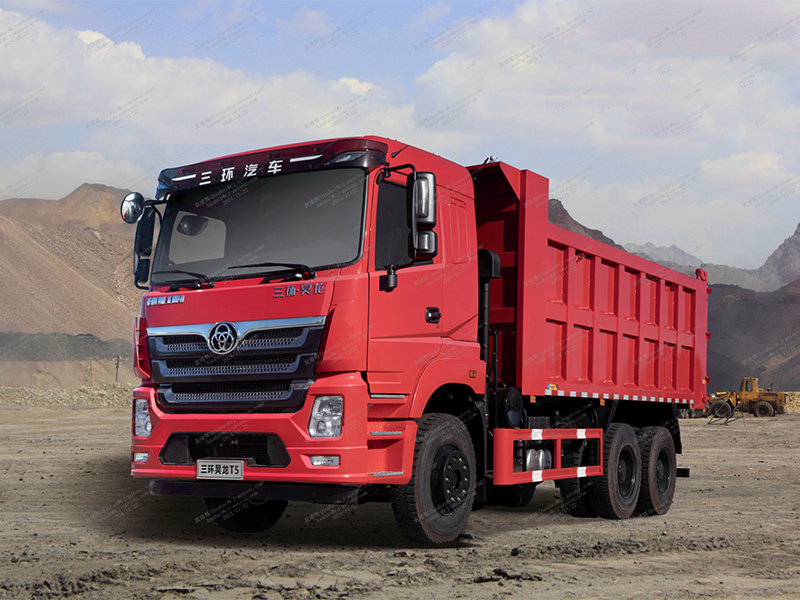
A 6x4 dump truck uses a standard axle naming system. The first number represents the total number of wheel positions, while the second number shows how many wheels receive power. A 6x4 truck has six wheel positions and four powered wheels, including one front steering axle and two rear drive axles.
How the 6x4 Drive System Works
The tandem rear axles work together to improve traction and load handling. Power moves from the engine through the transmission and driveshaft to the rear axles. A power divider distributes torque between both drive axles, helping the truck maintain movement on mud, gravel, and uneven terrain. Drivers can activate the differential lock when extra traction is needed.
Key Components of a 6x4 Drivetrain
A typical 6x4 dump truck includes several important drive components:
Transmission: Transfers engine power into usable torque.
PTO System: Powers the hydraulic dump hoist.
Driveshaft: Sends power from the transmission to the rear axle.
Power Divider: Splits power between two rear axles.
Inter-Axle Driveshaft: Connects the two drive axles.
Differential Locks: Improve traction in difficult conditions.
Why Choose a 6x4 Dump Truck?
Compared with single-drive trucks, 6x4 models provide better traction and stability on construction sites. The two rear drive axles increase tire contact with the ground, helping the truck handle mud, loose gravel, steep slopes, and heavy loads. This makes 6x4 dump trucks a reliable choice for demanding off-road hauling operations.
6x4 Dump Truck Capacity, Dimensions, and Size Charts
Physical dimensions and legal weight limitations dictate operational success in the hauling industry. You must evaluate payload capacity through two distinct lenses. First, understand the mechanical maximums engineered by the manufacturer. Second, calculate the legal maximums permitted by local highway authorities. A standard tandem setup typically hauls between 14 and 18 tons legally. The exact number depends heavily on the empty tare weight of the chassis and the dump body.
Converting between cubic yards and tonnage requires understanding material density. A dump box might hold 14 cubic yards of volume. However, you cannot always fill it to the brim. One cubic yard of dry topsoil weighs roughly 2,000 pounds. One cubic yard of wet gravel can exceed 3,000 pounds. Demolition debris often features irregular shapes and high void spaces, lowering the overall weight per yard. If you load 14 yards of wet gravel, you will exceed the 18-ton legal limit and risk severe DOT fines. Operators must match the box volume to the primary material density they intend to haul.
Material Type | Estimated Weight per Cubic Yard (lbs) | Max Yards for 16-Ton Legal Payload |
|---|---|---|
Dry Topsoil | 2,000 - 2,200 | 14.5 - 16.0 |
Dry Sand | 2,600 - 2,800 | 11.4 - 12.3 |
Wet Gravel | 3,000 - 3,200 | 10.0 - 10.6 |
Asphalt | 3,900 - 4,000 | 8.0 - 8.2 |
Broken Concrete | 2,400 - 2,600 | 12.3 - 13.3 |
Standard dimensions impact where the vehicle can physically operate. Overhead clearance remains a major factor for loading facilities and paving equipment. Trucks must fit under asphalt plant silos and aggregate hoppers. When the dump body raises to its maximum dump angle, the highest point can reach over 20 feet. Operators must verify clearance around power lines and tree canopies before engaging the PTO.
Specification | Imperial Measurement | Metric Measurement |
|---|---|---|
Overall Length | 24 - 28 feet | 7.3 - 8.5 meters |
Overall Width | 8.0 - 8.5 feet | 2.4 - 2.6 meters |
Cab Height | 9.5 - 10.5 feet | 2.9 - 3.2 meters |
Typical Payload | 28,000 - 36,000 lbs | 12.7 - 16.3 metric tons |
Box Volume | 10 - 14 cubic yards | 7.6 - 10.7 cubic meters |
Local axle weight restrictions and the Federal Bridge Formula severely impact usable payload. The Bridge Formula prevents heavy vehicles from damaging highway infrastructure. It calculates allowable weight based on the distance between axles. A shorter wheelbase concentrates weight over a smaller bridge span. Therefore, a truck with a short wheelbase receives a lower legal gross weight rating. Fleet managers often specify longer wheelbases to maximize legal payload. However, this extension compromises the turning radius. You must balance the need for maximum legal tonnage against the physical constraints of your typical job sites.
Common Applications of 6x4 Dump Trucks
6x4 dump trucks are widely used in industries that require a balance of payload capacity, traction, and maneuverability. Their tandem rear axles provide strong load support while still allowing flexible operation in different job sites.
Construction and Earthmoving
Construction sites rely on 6x4 dump trucks for transporting materials such as sand, soil, gravel, and demolition waste. Their dual rear axles provide better traction and stability when working on uneven ground, while the shorter wheelbase helps drivers operate around excavators, trenches, and limited-access areas.
Landscaping and Site Preparation
6x4 dump trucks are suitable for delivering mulch, topsoil, and decorative stone to residential and commercial projects. Compared with larger trucks, they offer better maneuverability on narrow streets and small job sites while still carrying enough material for efficient delivery.
Asphalt and Paving Operations
Paving projects require trucks that can work smoothly with asphalt pavers. A 6x4 dump truck provides good reversing control and stable movement during unloading. Proper dump body design helps asphalt flow evenly into the paver, reducing material waste and improving paving efficiency.
Municipal and Highway Maintenance
Government and public works fleets use 6x4 dump trucks for year-round operations. They can transport salt, sand, and snow-control materials in winter, while also handling road repairs, asphalt transport, and debris removal in warmer seasons. Their versatility makes them a practical choice for many maintenance tasks.
4x2 vs 6x4 vs 8x4 Dump Trucks: Key Differences
Choosing the right axle configuration depends on payload needs, working conditions, and operating costs. A larger truck does not always mean better performance. The ideal choice is to balance load capacity, maneuverability, fuel efficiency, and maintenance requirements.

Payload Capacity Comparison
Different axle configurations support different hauling requirements.
Configuration | Payload Capacity | Best Application |
|---|---|---|
4x2 Dump Truck | 10–12 tons | Light construction, urban jobs |
6x4 Dump Truck | 14–18 tons | General construction, aggregate hauling |
8x4 Dump Truck | 20–25 tons | Heavy hauling, large-volume transport |
A 4x2 is suitable for smaller loads, while 6x4 provides a balance between capacity and flexibility. The 8x4 delivers maximum payload but requires larger operating space.
Payload vs Maneuverability
Increasing axles improves payload capacity but reduces flexibility. Larger trucks have longer wheelbases and wider turning requirements, making them harder to operate in narrow areas.
4x2: Best maneuverability for cities and small job sites.
6x4: Balanced choice for most construction operations.
8x4: Maximum capacity but limited access in tight spaces.
Fuel Efficiency and Tire Maintenance
More axles increase carrying ability but also increase operating costs. An 8x4 truck has more tires and drivetrain components, creating higher rolling resistance and faster tire wear during sharp turns.
A 6x4 configuration provides a strong balance. It delivers higher payload than a 4x2 while maintaining better fuel efficiency and lower maintenance costs than an 8x4. For many construction applications, it offers the best combination of productivity and operating economy.
How to Choose the Right 6x4 Dump Truck
Selecting a 6x4 dump truck requires matching the truck specifications with your working conditions. Focus on five key areas: cab design, engine performance, dump body material, hoist system, and suspension type.
Choose the Right Cab Design
Cab design affects visibility, maintenance, and operating comfort.
Conventional Cab
Engine located in front of the cab.
Easier engine access for maintenance.
Provides a smoother driving experience.
Cab-Over-Engine (COE)
Cab sits above the engine.
Shorter overall vehicle length.
Better front visibility for tight job sites.
Choose the cab style based on local regulations, road conditions, and space limitations.
Select the Right Engine and Transmission
A heavy-duty 6x4 dump truck needs strong low-speed power for hauling heavy loads.
Key factors include:
Engine Power: Usually 350–450 HP for heavy hauling.
Engine Torque: High torque helps the truck climb steep grades and move loaded material.
Transmission Choice:
AMT transmissions reduce driver fatigue and improve efficiency.
Automatic transmissions provide stronger performance in mud and difficult terrain.
The right powertrain improves productivity and reduces operating stress.
Choose Steel or Aluminum Dump Bodies
Dump body material directly affects payload and durability.
Material | Advantages | Best Application |
|---|---|---|
High-Tensile Steel | Strong impact resistance, excellent wear performance | Rock, demolition waste, heavy aggregates |
Aluminum | Lower weight, higher payload capacity | Sand, gravel, asphalt |
Steel offers better durability, while aluminum helps increase legal payload by reducing empty truck weight.
Select the Proper Hoist System
The hoist system determines dumping stability and efficiency.
Front-Mount Telescopic Hoist
Provides strong lifting force.
Requires less hydraulic pressure.
Underbody Scissor Hoist
Improves stability during dumping.
Suitable for uneven or sloped job sites.
Choose the hoist type based on terrain conditions and dumping requirements.
Match Suspension to Your Working Environment
Suspension selection affects ride comfort, durability, and off-road capability.
Suspension Type | Advantages | Suitable For |
|---|---|---|
Walking Beam | Strong load support and excellent articulation | Mining and rough terrain |
Air Ride | Better comfort and vibration control | Highway transportation |
Spring Suspension | Simple and reliable | Mixed applications |
Evaluate the percentage of highway and off-road operation before selecting the suspension system. A properly matched suspension improves truck life and reduces maintenance costs.
Conclusion
To maximize the efficiency of your hauling operations, take the following actions:
Audit your current payload bottlenecks to determine if your existing trucks frequently hit legal weight limits before reaching volumetric capacity.
Consult with a commercial vehicle dealer to run a custom weight distribution calculation based on your local bridge laws and typical material density.
Evaluate your job site constraints to ensure a tandem configuration provides the necessary turning radius for your daily routes.
Request a detailed specification sheet detailing the exact engine torque, transmission type, and body material required for your specific operational environment.
FAQ
Q: How many tons can a 6x4 dump truck legally haul?
A: A tandem dump truck typically hauls between 14 and 18 tons legally. This range depends heavily on the empty weight of the truck and local highway regulations. You must differentiate between the manufacturer's gross vehicle weight rating (GVWR) and the actual legal limits enforced by local bridge laws.
Q: How does a 6x4 compare to single-axle and tri-axle dump trucks?
A: Single-axle trucks haul 10 to 12 tons and serve light-duty, highly agile roles. The tandem configuration hauls 14 to 18 tons, providing versatile medium to heavy-duty performance. Tri-axle and quad-axle trucks haul 20 to 25 tons, designed specifically for maximum highway payload where maneuverability is not a primary concern.
Q: How many cubic yards fit in a standard tandem dump truck?
A: A standard tandem dump box typically holds 10 to 14 cubic yards of material. The actual usable volume depends on the side height of the box and the density of the hauled material. Heavy materials like wet gravel will max out the weight limit before filling the entire volume.
Q: What is the difference between a 6x4 and a tandem dump truck?
A: These terms are generally synonymous in the commercial trucking industry. The "6x4" designation technically refers to six wheel ends with four being driven. "Tandem" refers to the two rear axles grouped together. Both terms describe the exact same dual-drive rear axle configuration.
Q: Is a 6x4 or 8x4 dump truck better for residential construction and landscaping?
A: The tandem configuration is significantly better for residential work. It offers a tighter turning radius and a smaller physical footprint. This agility is critical for navigating narrow residential streets, cul-de-sacs, and tight driveways without causing damage to private pavement or curbing.
Q: What type of driver's license is required to operate a 6x4 dump truck?
A: Operating a tandem dump truck typically requires a Commercial Driver's License (CDL). In most jurisdictions, a Class B CDL is required for driving a single heavy vehicle. If you plan to tow a heavy equipment trailer behind the truck, you will likely need to upgrade to a Class A CDL.
Q: How do I choose between a steel and aluminum dump body?
A: Choose high-tensile steel if you haul abrasive materials like demolition debris, large rocks, or heavy riprap. Steel resists impact damage effectively. Choose aluminum if you haul sand, gravel, or asphalt. Aluminum saves up to 2,000 pounds of empty weight, allowing you to haul more legal payload per trip.


