


How to Choose a Dump Truck for Construction Projects
Views: 0 Author: Site Editor Publish Time: 2026-09-24 Origin: Site


Selecting the wrong hauling equipment directly impacts project margins through increased cycle times, excessive maintenance, or regulatory fines. Equipment procurement requires matching vehicle specifications with unpredictable site variables. You must account for unpaved terrain, tight urban footprints, varied aggregate densities, and required transit speeds. A mismatched truck either hauls dead weight or suffers structural failure under heavy loads.
You need a systematic evaluation framework to align project requirements with truck configurations. This ensures optimal payload efficiency, safety compliance, and long-term reliability when investing in a dump truck for construction. By analyzing site constraints and material demands first, you can engineer a truck specification that maximizes daily tonnage while surviving harsh job site conditions. We will break down exactly how to match axle ratings, box materials, and powertrains to your specific operational reality.
Key Takeaways
Payload vs. Compliance: Maximizing capacity requires balancing gross vehicle weight rating (GVWR) with local bridge laws and axle regulations.
Terrain and Speed Dictate Configuration: Drive types (e.g., 6x4 vs. 8x4), gearing, and suspension systems must be matched to site conditions, balancing highway transit speeds with severe off-road grading capabilities.
Material Determines Box Design: The choice between steel and aluminum, or rectangular and half-round beds, hinges entirely on the abrasiveness, size, and spreading requirements of the hauled materials.
Table of Contents
How to Define Your Dump Truck Requirements
Choosing a Dump Truck Based on Project Size
Dump truck selection should match the scale of your project. Small residential jobs need compact trucks with better maneuverability, while commercial construction requires a balance between payload and site flexibility. Large civil and mining projects need heavy-duty trucks designed for maximum capacity and continuous operation.
How Job Site Conditions Affect Truck Selection
Working conditions directly affect the right truck configuration. Consider road quality, terrain, space limitations, and transportation distance before purchasing. Urban sites need better visibility and turning ability, while off-road projects require stronger traction, ground clearance, and climbing performance.
Choosing a Dump Truck Based on Material Type
Material type determines the required payload, body design, and truck durability. Heavy materials like concrete and gravel require stronger bodies and higher load capacity, while lighter materials such as soil may allow larger-volume beds. Always consider material weight, abrasiveness, and daily hauling volume when selecting a dump truck.
Material Type | Approximate Weight (lbs per cubic yard) | Abrasiveness / Impact Level | Recommended Bed Material |
|---|---|---|---|
Dry Topsoil | 2,000 - 2,200 | Low | Aluminum or Mild Steel |
Dry Sand | 2,600 - 2,900 | Medium | Aluminum or Hardox Steel |
Crushed Stone / Gravel | 2,700 - 3,000 | High | AR400 Steel |
Wet Clay | 3,000 - 3,500 | Low (but highly sticky) | Half-Round Steel or Aluminum |
Broken Concrete / Riprap | 3,500 - 4,000+ | Extreme | AR500 High-Tensile Steel |
Dump Truck Weight Regulations and Bridge Laws
Review state and federal weight restrictions thoroughly. The Federal Bridge Gross Weight Formula dictates how much weight a truck can carry based on the number of axles and the distance between them. You cannot simply buy a larger box to haul more material on public roads. The formula is designed to protect bridges from catastrophic failure by forcing heavy loads to spread out over a longer distance.
Determine how legal weight limits impact your required number of axles and axle spacing. Spreading the load across more axles allows you to increase your gross vehicle weight legally. Failing to engineer your truck for local bridge laws results in severe overweight citations, forced offloading at weigh stations, and potential impoundment of the vehicle. You must consult your local Department of Transportation regulations before finalizing any wheelbase or axle configuration.
Common Dump Truck Types and Axle Configurations
Single Axle vs Tandem Axle Dump Trucks
Single-axle dump trucks are designed for light-duty work such as landscaping, residential construction, and urban projects. They offer excellent maneuverability but have limited payload capacity. Tandem-axle trucks provide a better balance between payload, stability, and road compliance, making them the most common choice for general construction and commercial hauling.
Tri-Axle and Quad-Axle Configurations
Tri-axle and quad-axle dump trucks use additional lift axles to improve weight distribution and increase legal payload capacity. These configurations are ideal for high-volume hauling because they can carry more material per trip. However, they require higher maintenance due to additional tires, brakes, and pneumatic systems.
Special Dump Truck Types for Different Jobs
Different projects require specialized dump truck designs. Super 10 trucks provide higher payload capacity while maintaining good maneuverability. Articulated dump trucks perform well in muddy and uneven terrain with excellent off-road capability. Bottom dump trucks are designed for efficient material spreading in road construction and large aggregate projects.
Choosing the Right Dump Truck Body Design
Rectangular vs Half-Round Dump Bodies
Rectangular dump bodies provide more flat loading space and are suitable for transporting various materials and equipment. However, their corners can trap sticky materials like clay. Half-round dump bodies use a curved design to improve material discharge, reduce leftover material, lower body weight, and provide better stability during dumping.
Steel vs Aluminum Dump Truck Beds
Steel beds offer excellent durability and impact resistance, making them suitable for heavy materials like rocks, concrete, and demolition waste. Aluminum beds are lighter and improve payload capacity while offering better corrosion resistance. However, aluminum is better suited for lighter, non-abrasive materials due to lower impact resistance.

Dump Truck Hydraulic Hoist Types Explained
Hydraulic hoist systems control how safely and efficiently the dump body lifts. Front-mounted telescopic hoists provide strong lifting power for larger dump bodies, while underbody hoists offer a cleaner design and better protection for smaller trucks. The right system depends on truck size, load type, and operating conditions.
Choosing Tailgates and Tarp Systems
Tailgate and tarp systems improve loading efficiency and road safety. Different tailgate designs suit different materials, from sand and gravel to large demolition debris. Automated tarp systems help secure loads, reduce material loss, and improve compliance with transportation regulations.
Engine, Transmission, and Chassis Selection
Choosing the Right Engine and Transmission
Engine and transmission selection should match the truck’s weight, terrain, and hauling conditions. High torque is essential for moving heavy loads on steep or rough roads, while horsepower supports highway performance. AMT transmissions improve fuel efficiency and driver comfort, while automatic transmissions provide smoother power delivery in demanding off-road conditions.
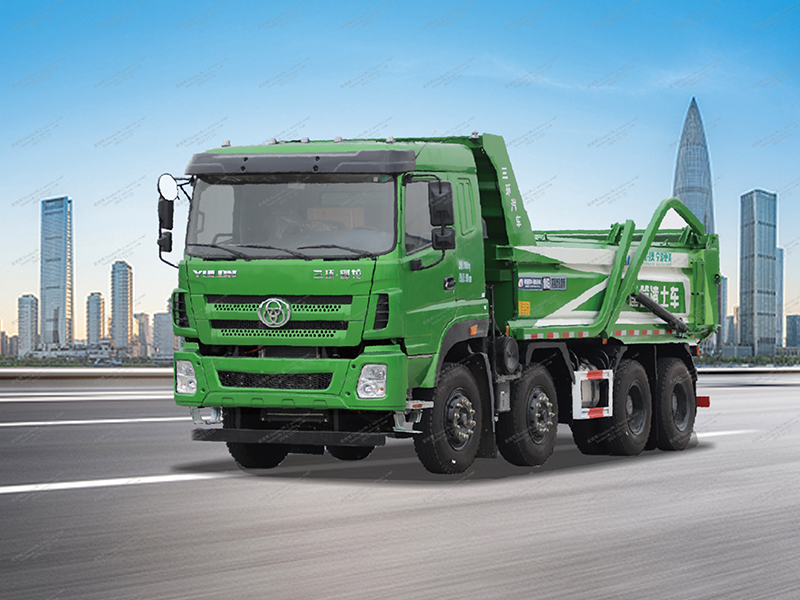
4x2 vs 6x4 vs 8x4 Dump Truck Configurations
Axle configuration determines payload capacity, traction, and operating conditions. A 4x2 suits lighter highway hauling, a 6x4 provides better traction for heavy-duty work, and an 8x4 supports maximum payload distribution. Selecting the correct axle ratio and traction system ensures the truck performs efficiently on both roads and job sites.
Suspension Systems: Walking Beam vs. Air Ride
Suspension choice affects durability, comfort, and stability. Walking beam suspensions provide strong load support and better off-road performance, while air ride systems deliver a smoother highway ride. Choose the suspension type based on the balance between rough-site operation and long-distance transportation.
Integrated Technology and Safety Systems
Modern dump trucks use smart systems to improve efficiency and safety. Payload monitoring helps prevent overloading and ensures maximum legal loads, while telematics supports predictive maintenance. Safety features such as cameras, blind-spot monitoring, and collision warning systems help reduce accidents in demanding work environments.
Common Dump Truck Buying Mistakes
Avoid Choosing the Wrong Truck Size
Choosing a truck that is too large or too small can increase operating costs. An oversized truck adds unnecessary weight, fuel consumption, and maintenance expenses, while an undersized truck may suffer from excessive wear and safety problems. Review your past loads, routes, and working conditions to select the right axle setup, body material, and engine power for your daily operations.
Checking Supplier Support and Parts Availability
Reliable supplier support is essential for keeping trucks working efficiently. Long delivery times or unavailable replacement parts can cause expensive downtime. Choose manufacturers with strong dealer networks, fast parts supply, and technical support to ensure quick maintenance and stable fleet operation.
Conclusion
There is no universal "best" truck for hauling dirt and rock. The optimal choice is a precise mathematical match between site constraints, material density, transit speeds, and local weight laws. A perfectly specified Dump Truck for Construction Projects acts as a seamless extension of your excavation fleet, moving maximum tonnage safely and legally.
When shortlisting vehicles, finalize your required payload and axle configuration first to ensure legal compliance. Select the appropriate box material and shape second based on material abrasiveness. Specify the powertrain, gearing, and technology packages last to match your terrain and driver requirements.
Audit your recent project payload tickets to determine your true average daily tonnage requirements.
Map your most frequent haul routes to identify specific bridge weight restrictions and highway speed limits.
Consult with a commercial fleet specialist to calculate the exact axle spacing needed for your state regulations.
Schedule an on-site equipment demo to test turning radii, ground clearance, and suspension articulation on an active job site.
FAQ
Q: What is the most common dump truck configuration for general construction?
A: The tandem-axle (6x4) configuration is the industry standard. It provides a reliable balance of highway-legal payload capacity, off-road traction, and maneuverability for standard commercial and residential job sites.
Q: How do bridge laws affect dump truck payload capacity?
A: The Federal Bridge Gross Weight Formula restricts vehicle weight based on the number of axles and the distance between them. To carry more weight legally on public roads, you must add axles or increase the wheelbase to spread the load.
Q: When should I choose an articulated dump truck over a rigid frame?
A: Choose an articulated dump truck (ADT) for severe off-road environments. Their oscillating hitch and all-wheel drive allow them to navigate deep mud, steep grades, and deeply rutted terrain where standard rigid frame trucks would get stuck or suffer frame damage.
Q: Is an aluminum dump bed suitable for hauling large rocks?
A: No. Aluminum is highly susceptible to denting, cracking, and structural failure under heavy point loads. Hauling large rocks, concrete rubble, or abrasive riprap requires a high-tensile steel bed (like AR400 or AR500) to withstand the impact forces.
Q: What is the advantage of a half-round dump body?
A: A half-round body prevents wet or sticky materials from getting trapped in corners. The curved design eliminates the need for heavy cross-members, reducing the truck's empty weight and increasing payload capacity while improving stability during discharge.
Q: How does axle ratio impact dump truck performance?
A: The axle ratio dictates the balance between speed and torque. A higher numerical ratio provides massive low-end torque for climbing steep grades fully loaded, while a lower ratio allows for faster, more efficient highway cruising.


