


4x2 Dump Truck: Capacity, Applications and Buying Guide
Views: 0 Author: Site Editor Publish Time: 2026-09-24 Origin: Site


Fleet managers and owner-operators frequently face a massive operational hurdle when procuring medium-duty hauling equipment. They either over-spec their vehicles, wasting capital on unused capacity, or they under-spec their fleet, risking premature mechanical wear and severe DOT fines. Finding the exact balance between job site maneuverability, lower operating expenses, and strict payload requirements is a constant battle. Local weight compliance laws further complicate this decision, making equipment selection a high-stakes process.
The 4x2 dump truck serves as a highly specific, targeted solution for these exact applications. By understanding its mechanical limitations and operational strengths, you can optimize your hauling capabilities without overextending your maintenance budget. This guide explores how to evaluate technical specifications, calculate true payload capacity, and determine if a single-axle configuration aligns with your operational goals.
Key Takeaways
Payload Realities: A standard 4x2 dump truck (single rear axle) typically handles 10–12 tons or 5–7 cubic yards, strictly governed by Gross Vehicle Weight Rating (GVWR) and local bridge laws.
Optimal Use Cases: Excels in urban construction, residential landscaping, and municipal maintenance where a tight turning radius is more critical than maximum gross tonnage.
Cost Efficiency: Offers significantly lower operating costs compared to 6x4 configurations due to reduced initial purchase price, lower fuel consumption, fewer tires to replace, and decreased toll costs.
Procurement Focus: Purchasing decisions must prioritize chassis Yield Strength (RBM), appropriate hoist mechanisms, matching dump body materials to specific material densities, and rigorous evaluation of maintenance history if buying used.
Table of Contents
What Is a 4x2 Dump Truck?
Defining success for a medium-duty fleet requires a hard look at daily operations. Success means maximizing vehicle uptime, minimizing overhead expenses, and consistently accessing restricted or confined job sites without damaging property. When you evaluate hauling equipment through this lens, the drivetrain configuration becomes the most critical specification on the build sheet. You cannot force a heavy-duty highway truck into a tight residential application without suffering severe efficiency losses.
4x2 Dump Truck Axle Configuration Explained
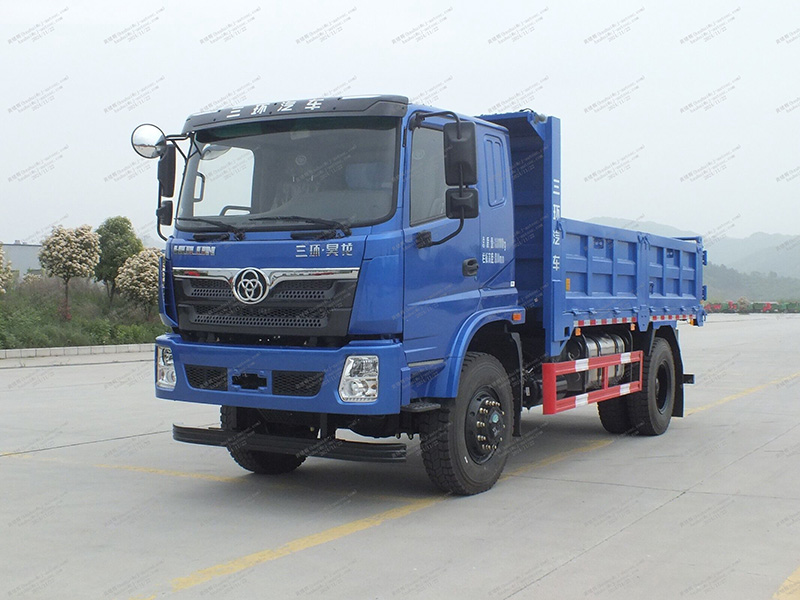
The nomenclature for commercial truck drivetrains indicates the total number of wheel ends and driven wheel ends. The first number represents four total wheel ends on the ground. The second number indicates that two of those wheel ends receive power from the engine. In this configuration, power routes exclusively through the driveshaft to a single rear drive axle. Industry professionals frequently use the term interchangeably with "single-axle dump truck." This setup eliminates the heavy power divider and inter-axle driveline found on larger vocational trucks.
4x2 vs. 6x4 (Tandem Axle) Trade-offs
Choosing between a single rear axle and a tandem rear axle involves distinct operational trade-offs. The most immediate difference lies in maneuverability and physical footprint. A 4x2 dump truck features a significantly shorter wheelbase, often measuring between 144 and 160 inches. This shorter length allows drivers to navigate narrow city streets, tight alleyways, and cramped residential cul-de-sacs with ease. Tandem axle trucks require a much wider turning radius, making them cumbersome or entirely unusable in confined spaces.

Traction capabilities also dictate the choice between these configurations. A 6x4 setup drives power to four rear wheel ends across two axles. This superior traction is absolutely required for massive earthmoving projects, navigating heavy wet clay, and deep off-road grading. The single drive axle on a 4x2 limits its off-road capability. These trucks perform best on paved surfaces, compacted gravel, or light-duty dirt roads where deep mud is not a factor. If you take a single-axle truck into an uncompacted landfill or a muddy excavation site, you will likely need a tow out.
Specification | 4x2 Dump Truck (Single Axle) | 6x4 Dump Truck (Tandem Axle) |
|---|---|---|
Driven Wheel Ends | 2 | 4 |
Typical Wheelbase | 144" - 160" | 180" - 220"+ |
Turning Radius | Excellent (Ideal for urban/residential) | Poor (Requires wide intersections) |
Off-Road Traction | Limited (Best on hardpack/pavement) | Superior (Handles mud and loose dirt) |
CDL Requirement | Often Non-CDL (Under 26,000 lbs GVWR) | Class B or A Required (Over 26,000 lbs) |
The configuration directly impacts Commercial Driver's License (CDL) requirements. Many single-axle trucks are specified with a Gross Vehicle Weight Rating (GVWR) just under 26,000 pounds. This specific rating allows operators without a CDL to drive the vehicle legally, vastly expanding your potential hiring pool. Tandem axle trucks almost universally exceed this weight threshold, strictly requiring a Class B or Class A CDL, which comes with higher driver wages and stricter regulatory compliance.
4x2 Dump Truck Capacity and Payload Calculations
Understanding exactly how much material you can legally and safely haul requires more than just looking at the size of the dump box. Payload capacity is a strict mathematical equation dictated by factory engineering and federal regulations. Ignoring these calculations leads to broken leaf springs, blown airbags, and out-of-service violations at the weigh station.
Standard GVWR and Axle Weight Limits
Every commercial chassis carries a specific GVWR, which is the absolute maximum the truck can weigh when fully loaded, including fuel, driver, and cargo. For a standard Class 7 single-axle truck, this rating typically sits between 26,000 and 33,000 pounds. This total is distributed across two axles. A typical front steer axle is rated for 10,000 to 12,000 pounds. The rear drive axle usually carries a rating of 21,000 to 23,000 pounds. Exceeding either the individual axle rating or the total GVWR results in severe mechanical strain.
Volume vs. Weight (Calculating True Payload)
A common mistake among operators is filling the dump body to the brim without calculating the actual weight of the material. Physical volume (measured in cubic yards) does not equal weight (measured in tons). You must convert the dump body volume to load weight using material density variables. Struck capacity refers to a load leveled off at the top of the sideboards, while heaped capacity includes the material piled above the sides. Both affect your final scale weight.
Different materials exert vastly different weights per cubic yard. Dry topsoil weighs approximately 2,000 pounds (1 ton) per cubic yard. If you have a 6-yard box, a full load of dry topsoil weighs 6 tons. However, wet clay or crushed aggregate can weigh up to 3,000 pounds (1.5 tons) per cubic yard. Filling that same 6-yard box with wet sand yields 9 tons of payload. If your truck's legal payload capacity is only 7 tons, a full box of wet sand will put you overweight, despite fitting perfectly within the physical dimensions of the bed.
Dump Truck Capacity Chart
The following matrix provides a quick-reference guide mapping common cubic yard capacities to estimated tonnage for standard materials. Use this data to stay within the legal limits of a single-axle chassis.
Dump Body Volume | Estimated Payload (Dry Soil/Mulch) | Estimated Payload (Wet Sand/Gravel) | Typical Chassis Suitability |
|---|---|---|---|
5 Cubic Yards | 5.0 - 6.0 Tons | 7.0 - 7.5 Tons | Under 26,000 lb GVWR (Non-CDL) |
6 Cubic Yards | 6.0 - 7.2 Tons | 8.5 - 9.0 Tons | 26,000 - 33,000 lb GVWR (CDL Required) |
7 Cubic Yards | 7.0 - 8.4 Tons | 10.0 - 10.5 Tons | 33,000 lb GVWR (Heavy Spec Single Axle) |
Legal Compliance and Bridge Laws
Federal and state weight limits dictate your actual hauling capacity. The Federal Bridge Gross Weight Formula determines the maximum weight permissible on a set of axles based on the spacing between them. Because a 4x2 dump truck has a short wheelbase, the weight is concentrated over a smaller area of the road surface. Consequently, local DOT enforcement officers scrutinize single-axle trucks heavily. Physical box volume never overrides legal axle weight limits. You must scale your trucks regularly to ensure compliance, especially when switching from hauling light mulch to heavy crushed concrete.
Best Applications for 4x2 Dump Trucks
Deploying the right equipment for the specific environment dictates operational efficiency. The single-axle configuration shines in environments where larger trucks simply cannot operate without causing property damage or blocking traffic.
Urban Construction and Tight Job Sites
Inner-city development and urban construction sites present massive logistical hurdles. Space is heavily restricted. Navigating alleys, residential streets, and confined commercial sites requires a short wheelbase and a sharp turning radius. A single-axle truck can back into a narrow residential driveway to deliver gravel without cracking the concrete apron. This is a common issue when heavy tandem axles pivot and scrub their tires on residential pavement, leaving black marks and damaging the concrete surface. Their compact footprint allows them to operate efficiently without blocking multiple lanes of city traffic during unloading.
Landscaping and Light Aggregate Hauling
Landscaping companies rely heavily on these vehicles. The daily requirements usually involve hauling high-volume, lower-weight materials such as wood mulch, brush, decorative stone, and backfill dirt. Because these materials bulk out (fill the physical space) before they weigh out (hit the maximum chassis weight), the single-axle truck provides the perfect balance of volume capacity and fuel efficiency. Landscapers do not need the heavy-duty traction of a tandem axle to dump mulch on a suburban lawn. Furthermore, the lighter footprint prevents the truck from sinking into soft turf and destroying the client's yard.
Municipal and Highway Maintenance
Public works departments utilize these trucks for year-round municipal maintenance. They are the backbone of city fleets. During summer months, they haul asphalt for pothole patching and remove debris from municipal parks. They easily fit under asphalt plant silos and maneuver around tight paving machines. During winter months, their maneuverability makes them ideal for integration with front-mounted snow plows and rear tailgate salt spreaders. A single-axle plow truck can clear cul-de-sacs and tight neighborhood intersections far more efficiently than a bulky multi-axle highway plow.
How to Choose the Right 4x2 Dump Truck
Purchasing a commercial vehicle requires strict attention to the engineering specifications. You must match the powertrain, frame, and body components to your specific daily tasks. A poorly spec'd truck will fight you every day on the job site.
Engine Specs and Powertrain Selection
Medium-duty applications require a specific balance of horsepower and torque. Most single-axle configurations perform optimally with engines producing between 240 and 300 horsepower, accompanied by 500 to 700 lb-ft of torque. Diesel engines remain the industry standard due to their low-end torque and longevity under heavy loads. You need that low-end grunt to pull a fully loaded box out of a steep excavation pit. However, emerging alternative fuel options, including compressed natural gas (CNG) and fully electric chassis, are gaining traction in municipal fleets operating on fixed daily routes with return-to-base charging capabilities.
Chassis Strength and Frame Yield
The foundation of any vocational truck is its frame. When evaluating a chassis, you must check the Resisting Bending Moment (RBM). RBM measures the frame's ability to resist bending under a load. It is calculated by multiplying the section modulus of the frame rail by the yield strength of the steel. A higher RBM means a stiffer frame. Frame thickness and stiffness matter immensely for dumping stability. When the dump box raises, the center of gravity shifts upward and rearward. If the truck is parked on uneven ground, a weak frame will twist, dramatically increasing the risk of a rollover. Look for frame rails with at least 80,000 to 120,000 PSI yield strength for dump applications.
Dump Body Specifications
Selecting the right dump body material impacts both durability and legal payload. High-tensile steel offers maximum durability. It resists denting and gouging, making it mandatory for hauling demolition debris, riprap, and large rock. However, steel is heavy. Aluminum dump bodies offer significant weight savings, often reducing the empty weight of the truck by 1,000 to 1,500 pounds. This reduction directly translates to increased legal payload capacity. Aluminum is ideal for hauling sand, gravel, and mulch, but it will suffer severe damage if used for heavy demolition.
Body Material | Primary Advantage | Primary Disadvantage | Best Suited For |
|---|---|---|---|
High-Tensile Steel (AR400/AR500) | Extreme impact resistance and durability | Heavy curb weight reduces legal payload | Demolition, large rock, riprap, asphalt |
Mild Steel (10 Gauge) | Cost-effective and easy to weld/repair | Prone to rust and moderate denting | General dirt, topsoil, light gravel |
Aluminum (5454 Alloy) | Maximizes legal payload, corrosion resistant | Easily gouged by heavy impacts, hard to weld | Sand, mulch, grain, non-abrasive aggregate |
You must also evaluate side heights and tailgate configurations. Lower sides make loading with a skid steer easier, preventing the bucket from striking the top rail. High-lift tailgates allow large debris like stumps or concrete chunks to clear the bed without jamming against the tailgate pins. Cab shields are critical for protecting the truck cab and driver from falling debris during the loading process. Ensure the cab shield extends past the rear window and covers the exhaust stack.
Hoist Mechanisms
The hoist does the heavy lifting, and its geometry matters. Telescopic front-mount hoists attach to the front of the dump body. They provide superior lifting leverage and greater stability, making them excellent for longer beds and heavier loads. Because they push from the front, they require a "doghouse" built into the front of the dump bed, which slightly reduces interior volume. Underbody hoists mount beneath the bed. While they offer slightly less lifting leverage, they keep the hoist mechanism protected from falling debris and allow for tighter cab-to-axle clearances. Underbody hoists are often preferred by municipalities that need to mount salt spreaders tightly against the cab.
Best 4x2 Dump Truck Brands for Fleets
Navigating the commercial truck market requires understanding which manufacturers specialize in medium-duty vocational applications. Not all chassis are built equally for the demands of a PTO-driven hydraulic system.
Leading Medium-Duty Chassis OEMs
Several manufacturers dominate the single-axle market. Ford's F-650 and F-750 lines are incredibly popular due to their wide service network and familiar cab layouts. Freightliner's M2 106 is an industry workhorse, praised for its visibility, tight turning radius, and ease of upfitter integration. The International MV series offers robust frame options and excellent multiplex electrical systems for body builders, making it easy to wire in strobe lights and spreader controls. Isuzu's F-Series provides a cab-over-engine design, offering unparalleled maneuverability in dense urban environments where every inch of wheelbase matters.
New vs. Used Procurement Dynamics
Procuring a new chassis and upfit allows for exact specification matching. You get the precise wheelbase, engine rating, and dump body material your operation requires. You can specify the exact Cab-to-Axle (CA) measurement needed for your specific box length. However, lead times for new builds can stretch for months as you wait for the chassis to arrive at the upfitter. Late-model used units offer immediate availability. When buying used, fleets must accept compromises on exact specifications, such as settling for a steel bed when aluminum was preferred, or adapting to a manual tarp system instead of an electric one.
Evaluating Used Inventory
Inspecting a used 4x2 dump truck requires a critical eye. You must review the comprehensive maintenance history, paying special attention to transmission fluid changes and axle servicing. Check the Power Take-Off (PTO) hours. Engine miles only tell half the story; a truck with low miles but extremely high PTO hours has spent thousands of hours running hydraulic pumps under load. Inspect the frame rails behind the cab and near the rear spring hangers for stress fractures. Examine the hoist cylinder for hydraulic leaks, pitting on the chrome stages, and rust around the mounting trunnions. Look closely at the rear hinge pins; if they lack grease and show severe wear, the bed will shift dangerously during dumping.
4x2 Dump Truck Operating Costs and ROI
Understanding the financial impact of your equipment choices ensures long-term profitability. A single-axle truck changes the math on your daily overhead.
Initial Acquisition vs. Utilization
You must calculate if the lower purchase price of a 4x2 justifies the reduced payload per trip compared to a tandem axle. If your typical job requires moving 100 tons of dirt, a tandem axle might do it in 6 trips, while a single axle requires 10 trips. However, if your jobs consist of delivering 5-ton loads of decorative stone to residential driveways, a tandem axle is massive overkill. The single axle maximizes utilization rates for high-frequency, low-weight deliveries.
Operational Savings
The reduction in consumable costs is substantial. A single-axle truck runs four rear tires instead of eight. That cuts your rear rubber replacement costs in half. You also have fewer brake shoes and drums to replace. Fuel economy improves significantly due to lower vehicle weight and reduced aerodynamic drag. Furthermore, toll roads and bridge crossings frequently charge by the axle. Dropping from three total axles to two yields immediate daily savings on toll routes.
Maintenance and Longevity
Assess the long-term maintenance profile of a single drive axle versus a complex tandem setup. Tandem trucks utilize a power divider (inter-axle differential) to split power between the two rear axles. This component requires regular fluid changes and is prone to catastrophic failure if a driver spins the tires improperly. A single-axle truck eliminates this component entirely. You have one rear differential to service, one set of wheel seals to monitor, and a much simpler driveline geometry.
Conclusion
Audit your most commonly hauled material density and measure your tightest job site dimensions before evaluating engine specifications.
Calculate your specific fleet payload needs based on your daily material volume to determine if a single-axle configuration meets your tonnage requirements.
Consult with a commercial truck dealer or certified upfitter to conduct a comprehensive weight distribution analysis on your proposed wheelbase.
Request itemized build sheets that clearly separate the chassis specifications from the dump body and hoist components.
Implement a mandatory driver training program focused on maximum axle load limits and safe dumping procedures on uneven terrain.
FAQ
Q: How many tons can a 4x2 dump truck haul?
A: A standard single-axle dump truck typically hauls between 10 and 12 tons of payload. This capacity is strictly contingent on the chassis curb weight and the Gross Vehicle Weight Rating (GVWR). Federal and state bridge laws also dictate the maximum allowable weight on the rear drive axle.
Q: Do you need a CDL to drive a 4x2 dump truck?
A: It depends on the truck's GVWR. If the truck is factory-rated with a GVWR of 26,000 pounds or less, you generally do not need a CDL. If the GVWR exceeds 26,001 pounds, a Class B CDL is federally required to operate the vehicle.
Q: What is the difference between a 4x2 and a 6x4 dump truck?
A: A 4x2 has a single rear drive axle with four wheels total, offering high maneuverability and lower payload capacity. A 6x4 features tandem rear drive axles with eight wheels total, providing superior traction for off-road earthmoving and significantly higher legal payload limits.
Q: How many cubic yards fit in a single-axle dump truck?
A: Most medium-duty single-axle dump bodies are designed to hold between 5 and 7 cubic yards of material level-loaded. Side boards can be added to increase the physical volume for lighter materials like wood mulch or brush.
Q: How do you calculate dump truck payload capacity?
A: You calculate payload capacity by subtracting the total curb weight of the empty vehicle (chassis, dump body, hoist, fuel, and driver) from the manufacturer's Gross Vehicle Weight Rating (GVWR). The remaining number is your maximum legal payload in pounds.
Q: Are aluminum dump bodies better than steel for a 4x2?
A: Aluminum bodies increase your legal payload capacity by significantly reducing the truck's empty curb weight. They are excellent for hauling sand and gravel. However, steel bodies are mandatory if you haul abrasive materials like concrete, demolition debris, or large riprap rock.


