


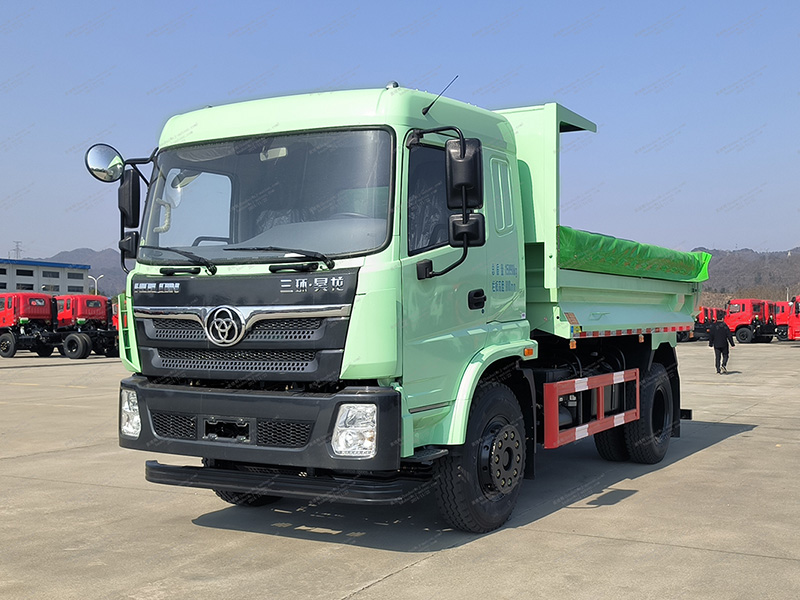


1. Product Introduction
The Tri-Ring 4x2 Heavy Duty Truck is engineered to deliver stable performance, high structural reliability, and operational endurance under demanding transportation environments. Built on a reinforced 4x2 drivetrain architecture, this model is designed for medium-to-heavy load logistics, municipal operations, and specialized transport tasks where torque consistency and chassis durability are critical.
Drivetrain: 4x2 rear-wheel drive configuration for balanced traction efficiency
Application scope: freight transport, construction materials, municipal services
Engineering focus: load stability, fuel-efficient power transmission, and chassis reinforcement
Structural design: heavy-duty ladder frame optimized for torsional resistance
This truck is not simply a transport tool—it is a controlled engineering system designed to reduce operational downtime, improve load cycle efficiency, and enhance driving stability under variable road conditions.
2. Product Description
The Tri-Ring 4x2 Heavy Duty Truck is built around a reinforced steel chassis that distributes load stress evenly across the frame, minimizing deformation during prolonged heavy-duty operations. The powertrain is matched with a high-torque diesel engine system optimized for low-speed pulling force and mid-range fuel economy, ensuring consistent output even in high-load environments.
Unlike conventional trucks that prioritize either power or efficiency, this model integrates both through optimized gear ratio calibration and drivetrain balancing. The suspension system is tuned to absorb road impact energy while maintaining cargo stability, reducing vibration transmission to the cargo compartment.
From an operator’s perspective, the driving experience is defined by predictable steering response, stable braking under load, and controlled acceleration even on inclines. This makes it particularly suitable for urban logistics corridors, industrial zones, and regional transport routes.
3. Product Parameters
Category | Specification (Typical Configuration) |
|---|---|
Drive Type | 4x2 Rear Wheel Drive |
Engine Type | Diesel, turbocharged |
Power Output | Approx. 160–220 HP (configurable) |
Gross Vehicle Weight | 12–18 tons depending on model |
Transmission | Manual / AMT optional |
Wheelbase | 3300–4200 mm (variant dependent) |
Frame Structure | High-strength ladder chassis |
Brake System | Air brake system with ABS option |
Fuel Tank Capacity | 200–400L (configurable) |
Application | Logistics, construction, municipal transport |
Note: Final specifications may vary depending on configuration and operational requirements.
4. Product Features and Engineering Highlights
4.1 High-Strength Chassis Architecture
The chassis is constructed using reinforced high-tensile steel, engineered to resist torsional stress during heavy load distribution. This improves long-term structural integrity and reduces fatigue failure under repeated loading cycles.
4.2 Optimized Power-to-Load Ratio
The engine and transmission system are calibrated to deliver optimal torque at low RPM ranges, ensuring smoother acceleration when carrying heavy cargo. This reduces fuel consumption while maintaining pulling efficiency.
4.3 Enhanced Suspension Stability System
A multi-leaf spring suspension system is used to stabilize vertical load movement. This minimizes cargo displacement and reduces shock impact during uneven road conditions.
4.4 Thermal and Fuel Efficiency Control
The cooling system is designed for high-temperature operating environments, maintaining engine stability during continuous long-haul operations. Fuel injection timing optimization improves combustion efficiency and reduces carbon residue accumulation.
4.5 Driver-Centric Control Interface
The cabin is structured for ergonomic operation with intuitive control placement, improved visibility angles, and vibration isolation materials that reduce operator fatigue during extended driving cycles.
5. Engineering Content Dimensions (Application-Oriented Analysis)
5.1 Load Adaptation Performance
The vehicle is engineered to maintain structural integrity under variable load conditions. Whether operating at partial load or full capacity, the chassis distribution system maintains equilibrium, preventing uneven axle stress.
5.2 Terrain Response Behavior
The 4x2 drivetrain configuration delivers consistent torque transfer on paved and semi-urban roads. Combined with optimized gear ratios, it ensures controlled traction without excessive fuel consumption.
5.3 Lifecycle Durability Engineering
Wear-resistant components in the drivetrain, braking system, and suspension are selected to extend maintenance intervals. This reduces operational interruption and improves total lifecycle efficiency.
5.4 Operational Efficiency Framework
Fuel consumption is optimized through aerodynamic cab shaping and engine mapping calibration. This reduces cost per kilometer while maintaining consistent performance output.
6. Why Choose This Truck
Built for long operational cycles with reduced maintenance frequency
Designed with engineered load stability for safer cargo transport
Optimized for fuel efficiency without sacrificing torque performance
Offers configurable structure for different industrial applications
Developed under strict structural reliability standards for heavy-duty use
This vehicle is ideal for operators who require predictable performance under continuous transport pressure, especially where downtime and inefficiency directly affect operational cost structures.
7. Frequently Asked Questions (FAQ)
Q1: What types of operations is this truck most suitable for?
It is suitable for construction material transport, municipal logistics, industrial freight distribution, and regional cargo movement requiring consistent torque delivery and structural durability.
Q2: Can the configuration be customized?
Yes. Engine power range, cargo body type, wheelbase, and transmission systems can be adjusted according to operational requirements.
Q3: How does the 4x2 system perform under heavy load?
The drivetrain is optimized for rear-axle load distribution, ensuring stable traction and controlled power output even under maximum rated payload conditions.
Q4: What maintenance considerations are required?
Routine maintenance includes engine oil replacement, brake system inspection, suspension tightening, and transmission fluid checks. The design supports extended service intervals.
Q5: Is this model suitable for long-distance transportation?
Yes, the engine efficiency system and chassis stability design make it suitable for both regional and medium-to-long haul transport operations.


